
Weeks 1–2
Pain
Calm the joint down.
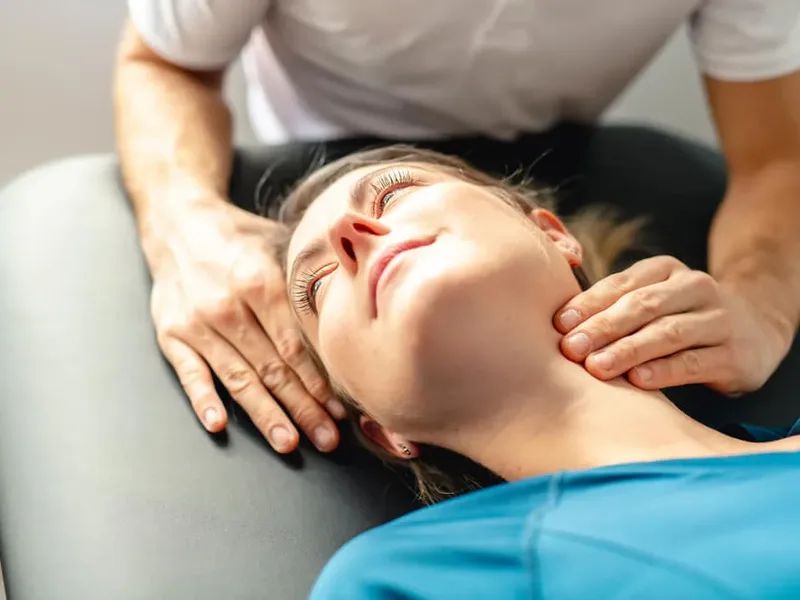
Hands-on techniques release the overworked jaw and neck muscles and ease the joint irritation starting your first visit.
What We Treat
The clicking, popping, or locking in your jaw that makes chewing, yawning, or talking through a long meeting feel like a chore. It’s fixable, and it starts with a cause-first evaluation, not a guess.
Sound Familiar?
Two or more? Your jaw is trying to tell you something.
Why It Happens
Your jaw joint relies on a small disc and a group of muscles working in sync every time you open and close your mouth. When those muscles get overworked, from clenching, grinding, or stress, or when the joint’s alignment shifts, the disc can slip out of its normal position. That’s what produces the clicking, locking, or pain.
A mouthguard or soft-food diet can quiet the symptoms for a while, but it doesn’t address why the muscles are overworking in the first place. A cause-first evaluation looks at your jaw mechanics, neck posture, and muscle tension together, since they’re usually connected, so the plan fixes the actual source, not just the symptom of the week.
The Honest Truth
Nobody regrets starting too early. Every week, someone in our clinic says they regret waiting.
How We Fix It
Every plan has an endpoint. Here’s what the four phases look like for TMJ pain.
Weeks 1–2
Pain
Hands-on techniques release the overworked jaw and neck muscles and ease the joint irritation starting your first visit.
Weeks 2–5
Prime
Targeted mobility work retrains how the joint and disc move together through a full, pain-free range.
Weeks 5–8
Perform
Postural and jaw-stabilizing exercises correct the habits, like clenching or forward head posture, that overload the joint.
Weeks 8+
Prevent
Your chewing, sleep position, and stress habits get addressed before you’re cleared: that’s the endpoint, not just another mouthguard.
Thank you, Nosheen! She is truly the best and genuinely cares about you. I felt so heard by her and always looked forward to my appointments. Since going to her, my TMJ pain is gone and my posture has improved. I’ve learned so much and I would recommend Specialized Physical Therapy to everyone.
Shared by Emma R. · TMJ/TMD
Week 1: eating soup and eggs only, jaw locking on the third bite
Week 6: back to steak night, no clicking, no locking
Questions, Answered
Usually not as a first step. Most TMJ pain comes from muscle tension and joint mechanics that a hands-on evaluation can identify directly. Imaging is reserved for cases where symptoms don’t respond to conservative care or a structural issue is suspected, and we’ll help you get it if that’s ever the case. You don’t have to wait on a referral to start feeling better.
Yes, with a few temporary adjustments. You don’t need to switch to a liquid diet forever, softening your food and pacing wide movements like yawning for a while helps calm things down while treatment addresses the actual cause. Your therapist will tell you exactly what to modify and for how long.
Most people notice less clicking and tension within the first few visits. A full plan for TMJ pain runs through all four phases, Pain, Prime, Perform, and Prevent, typically over 6 to 8 weeks, depending on how long you’ve been dealing with it. Either way, you get a plan with an endpoint, not an open-ended string of appointments.
Book Your Visit
Request a time and a real person calls you back, usually within two business hours. No phone tree. No ‘someone will reach out.’ Just a plan.
5.0 · 607 Google reviews
Typical response: under 2 business hours
Step 1 of 6
That’s the hard part done. We’ll call during business hours to lock in your time. Most people are on the schedule same week.
Visit Us