
Weeks 1–2
Pain
Calm the swelling down.
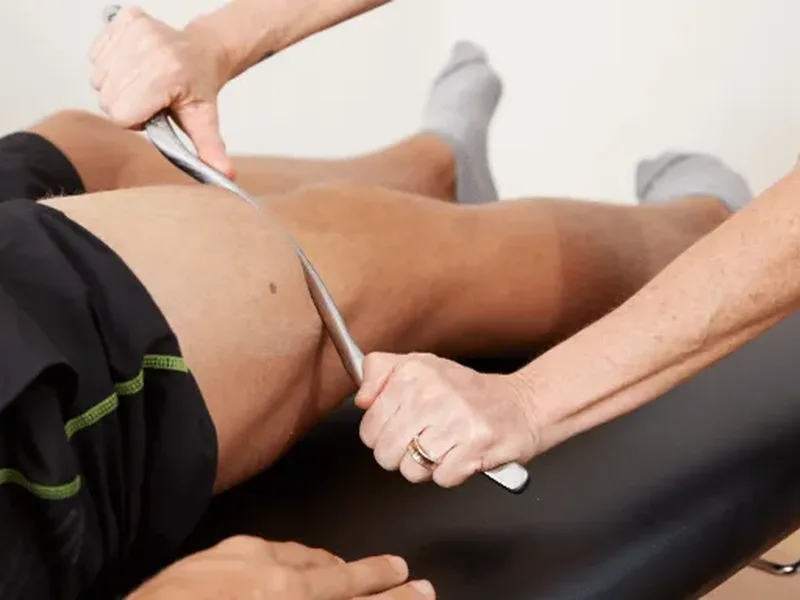
Hands-on techniques and guided movement reduce swelling and protect the joint starting your very first visit.
What We Treat
The rolled ankle you iced, wrapped, and figured would just get better. Weeks later it’s still swollen and you don’t quite trust it on uneven ground. It’s fixable, and it starts with a cause-first evaluation, not a guess.
Sound Familiar?
Two or more? A sprain that lingers is still fixable.
Why It Happens
A sprain stretches or tears the ligaments that normally hold your ankle steady. Even after the swelling goes down, those ligaments are often looser than before, and the tiny nerve sensors that tell your brain where your foot is in space don’t come back online automatically. That combination is why so many ankles keep rolling long after they’re supposed to be healed.
Rest and a brace protect the joint, but they don’t rebuild the strength or the balance reflexes that were lost. A cause-first evaluation tests exactly how stable, strong, and balance-ready your ankle actually is, so the plan rebuilds what the injury took instead of just waiting for the swelling to disappear.
The Honest Truth
Nobody regrets starting too early. Every week, someone in our clinic says they regret waiting.
How We Fix It
Every plan has an endpoint. Here’s what the four phases look like for a sprained ankle.
Weeks 1–2
Pain
Hands-on techniques and guided movement reduce swelling and protect the joint starting your very first visit.
Weeks 2–4
Prime
Targeted mobility work restores the range that stiffened up while the ankle was protecting itself.
Weeks 4–8
Perform
Progressive strengthening and balance drills retrain the stability reflexes the sprain knocked offline.
Weeks 8+
Prevent
Cutting, jumping, and uneven-ground mechanics get tested under real load before you’re cleared: that’s the endpoint, not just another appointment.
The facility is clean, spacious, and well-equipped. My therapist was friendly, respectful, and professional.
Shared by Fred T. · Ankle sprain
Week 1: on crutches, ankle wrapped and elevated most of the day
Week 6: back on the trail, no tape, no hesitation
Questions, Answered
If there was significant swelling, bruising, or you couldn’t bear weight right after the injury, imaging is worth ruling out a fracture, and we’ll help you get that quickly. But most sprains don’t need imaging to start treatment. A hands-on evaluation can tell us how stable the ligaments are and what’s driving the lingering swelling or weakness.
In most cases, yes, with the right amount of support and load. Staying off it completely for too long lets the surrounding muscles weaken and the balance reflexes stay offline, which is exactly what leads to repeat sprains. Your therapist figures out how much weight and movement your ankle can handle right now and builds from there.
Most people feel meaningful improvement within the first 2 to 3 visits. A full plan for an ankle sprain runs through all four phases, Pain, Prime, Perform, and Prevent, typically over 6 to 8 weeks, depending on the severity. Either way, you get a plan with an endpoint, not an open-ended string of appointments.
Book Your Visit
Request a time and a real person calls you back, usually within two business hours. No phone tree. No ‘someone will reach out.’ Just a plan.
5.0 · 607 Google reviews
Typical response: under 2 business hours
Step 1 of 6
That’s the hard part done. We’ll call during business hours to lock in your time. Most people are on the schedule same week.
Visit Us