
The Specialized Spotlight
Interview with Sean McMillan
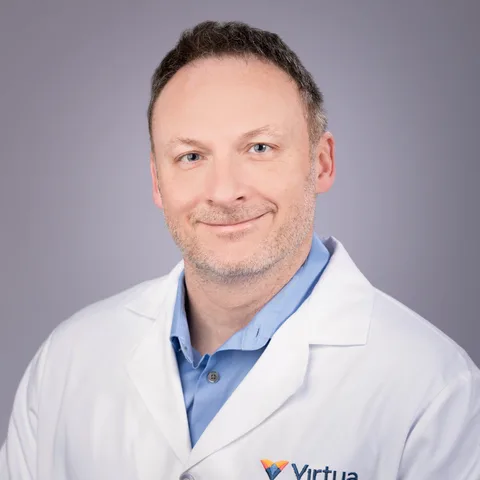
- Guest
- Sean McMillan
- Credentials
- DO
- Practice
- Virtua Reconstructive Orthopedics – Burlington
2103 Mount Holly Road
Burlington, NJ 08016
Discussion Details
In this Specialized Spotlight Episode we speak with Dr. Sean McMillan, DO, director of Virtua Health’s Orthopedic Sports Medicine Fellowship and Chief of Orthopedics at Virtua Mount Holly Hospital.
We discuss innovative approaches in orthopedic care for shoulder pain, hip pain, and knee pain. We touch upon reverse shoulder replacement surgery, arthroscopic procedures for the hip and knee, and how an opioid sparing approach improves outcomes and pain without having to fully rely on opioid pain medication.
Benefit of Watching
If you are experiencing shoulder pain, hip pain, and/or knee pain, this spotlight episode is a must watch. Dr. Sean McMillan, DO discusses contemporary approaches in orthopedic treatment designed to achieve pain relief and restore function.
Full Transcript
All right, everybody, good morning. My name is Dr. Paul Vidal. I am the owner of Specialized Physical Therapy in Cherry Hill and Burlington, New Jersey, and today is our inaugural episode of the Specialized Spotlight. The Specialized Spotlight is a series we’re going to run to highlight, or rather spotlight, local physicians and community organizations that we have come to know over the last 20 plus years of Specialized Physical Therapy. These physicians that we will speak to, we’ve come to know, like, and trust, and we would not hesitate to refer our friends, family, and patients to them if they need their services. So without further ado, our inaugural guest is Dr. Sean McMillan, Director of the Virtual Health Orthopedic Sports Medicine Fellowship and Chief of Orthopedics at Virtual Mount Holly Hospital. He practices at Virtual Reconstructive Orthopedics. So without further ado, please welcome Dr. Sean McMillan. Dr. McMillan, thank you for joining us today.
Paul, thanks for having me, man. I didn’t realize this was the inaugural one, so it’s an honor to be part of this. Thank you.
Yeah, you’re welcome. That’s awesome. Yeah, we really appreciate it. So let’s go right into it. So, you know, as a physician, an orthopedic physician and surgeon, you know, what kind of drew you to this specialty? You know, was there something in your life or a person or a mentor that kind of put you on your path?
So it’s a story I tell a lot, but, you know, growing up, my mom had some medical issues. So I always knew I wanted to be a physician. And then you start to figure out in medical school, like, I got to pick a specialty, right? Is it cardiology? Is it, you know, whatever. And as I started doing my rounds as a third-year, you do different rotations. I didn’t think I was going to find anything I liked. And I ended up one day randomly holding a retractor in an orthopedic room. And everyone was happy. Like, you walked into the room, it was like, like walking into, you know, The Wizard of Oz, like there was music on and the nurses were laughing and the doctors telling stories. And I looked at the surgeon and I said, hey, like, you know, what’s this patient’s, you know, recovery like? And he was like, oh, you know, be walking in a day or two and, you know, probably jogging in like six to eight weeks. I was like, wait, so no one’s going to die? You know, after this, right, we’re not like saving this guy’s life. And, you know, everyone kind of laughed. They’re like, no, this is, you know, sports medicine. And I was like, oh, and, you know, I love sports. And I know you love sports. So it became a natural fit because I could put my energy into helping patients and athletes get back to doing what they love. And all the injuries made sense to me as a person because I grew up watching, you know, the Yankees in Newark, Jersey, and hearing about Tommy John with his elbow and, you know, all the other things that went with that. So it kind of became this light bulb moment in the middle of my third year of medical school and, you know, the rest is sort of history.
That’s awesome. Yeah, we’ll get back to the Yankees in a second because that’s my team too. But yeah, so where’d you go to medical school?
Yeah, so I did medical school in Philadelphia at Philadelphia College of Osteopathic Medicine, right on city line. So great school, great experience. We were lucky because, you know, Jack McPhillamy was one of the head, actually Sixers team doctor at the time, and he was based at PCOM. So we got the experience of constantly being around, again, athletes; the Sixers practiced at our medical school. We got to rotate with Dr. McPhillamy and his team. So again, sort of reaffirmed everything we wanted to do. And you could see, you know, as an osteopathic, you know, physician, you know, the pinnacle, you know, Dr. McPhillamy up there taking care of, you know, Sixers on the sideline. I was like, I want to be that guy one day, you know, and it was a great sort of moment.
That’s awesome, man. That’s awesome. And then, and then where did you go to, where did you do your orthopedic training?
Yeah, so the, I basically went up and down the East Coast, right? So I went to medical school in Philly at PCOM. I did my internship year, which is one year of training right after medical school at what is now known as Virtua Rowan School of Osteopathic Medicine in South Jersey. Back then it was UMDNJ. Then I went to Long Island for my residency. So I was out in Long Island, part of the Long Island Jewish program for five years. And then I did my specialty training in orthopedic sports medicine up at the University of Massachusetts. So UMass, and I trained with Dr. Busconi and that’s where I got to work with the Red Sox. And that’s where, you know, my, my, my ties to the Yankees drifted and my parents stopped liking me and, and all the things that sort of go with that afterwards.
So. Gotcha. Well, since you brought it up, cause I was going to ask, we’re on the topic now. So yeah, being a baseball guy myself, and I grew up like in the Freehold, New Jersey area. So, like, it was like in between Philly and New York. So I was a Yankees fan and then, like, a Phillies fan second. So it was like a Reggie Jackson, Mike Schmidt type of guy. Right. But I have to ask, you know, you spent some time with the AAA Red Sox there as I was doing some research on you, of course. So what was that experience like? Cause I I’m assuming that’s not like a typical experience that a physician would get to work with a sports team. So, you know, the AAA Red Sox, how did that go?
It was, it was awesome. It was by far the best year of my life, like all the way around. Right.
You know, even though you’re not making really any money as a fellow, it was just one of those things where like, I can’t believe I’m sitting in the dugout and I’m examining professional baseball players and, you know, I’m getting, you know, quote unquote paid to literally watch baseball five nights a week. You know, it was by far the coolest experience and all the other things that went with that. And the great part is, as I mentioned, the guy that trained us, Dr. Busconi, actually trained one of my colleagues here at Virtual Reconstructive, Dr. Murray, as well.
They’ve allowed us to continue to go back each year. So every spring training, we have to go down to Fort Myers. We get to be around the team, get to help out with some physicals, get to see, you know, local players in the offseason that may need to be seen and referred over to take a look.
So that’s one of those things where you get to still get that little feel out of it, which is great. But it was without question the coolest year of my life. Yeah, I bet, man.
That sounds really awesome. And yeah, that’s really cool. You get to see that, especially in a sport you like.
Did you grow up playing baseball, by the way? Awfully. I mean, I wasn’t good at it, but I mean, listen, I played baseball like everyone else. Quickly realized my skill set was better for track than anything where I had a run, catch or hit a ball.
But nevertheless, I love baseball. I can still rattle off the back of Don Mattingly’s Topps baseball card from 1986, you know, but so numbers and things like that made sense. Yeah, that’s my guy, Donny Baseball, man.
I wish he had more success this year, but hey, you know, he’ll find it somewhere. So yeah, so now you had some experience with professional sports and I understand you work locally with some high schools. You’re a team physician for some high schools.
So, you know, what’s your role there and why is it important for high schools to have like a team physician such as yourself? Yeah, so it’s a great question. And so for us as physicians, obviously, it’s good to be plugged into the community. The people we’re seeing are literally, you know, these kids and adults coming in.
So, you know, we have different ways of making sure that the young athletes that get hurt get good care. So, you know, we as Virtual Reconstructed probably take care of close to double-digit schools, probably 10 or 11 schools. I myself am the school physician for three of our schools.
So not only do I get to see the athletes; I’m taking care of other things too, whether it’s, you know, issues with, you know, with learning issues, with sicknesses; we’re helping coordinate, making sure they get care. So it’s not, I’m not just selfish about their ACLs. I want to make sure that these guys and gals get access to the positions we have at Virtual, which is great.
But it’s fun to be on the sidelines. First of all, I mean, I love sports. I mean, I could watch football every Friday night and every Saturday afternoon if you asked me to.
But to be able to be there, show support for some of these kids, like there’s no better feeling than when a kid walks up to you on the sideline and says, ” Yo, Dr. McMillan, right? And you did their ACL or you did their shoulder surgery, or you just saw them for a sprain, right? And they’re out there making plays like, you know, that you directly impacted, you know, their life in a positive way. And, you know, that means all the world to me. And then also it builds trust, right? So not only am I taking care of them in the office, but they see I’m giving back and I’m out there doing it.
And my kids get to come sometimes and watch and hang out and see it. My kids are very into what I do, which is unique and great. So it’s just really good for me as a physician, the community, the hospital to have that close network.
And, you know, even yesterday I had three or four trainers text me various things, everything from a question about a brace up to, ” Hey, I got a kid who jammed his thumb. Can you get him in Monday? So we can bypass the usual access issues where, if you just make a phone call, you might be six weeks to see someone. We get a text, we get that kid in to see someone on our team, you know, Monday morning, first thing, which is, you know, really all you can ask for.
Yeah, that’s awesome, man. So, yeah. So now, you know, you kind of answered, I guess, because I didn’t even ask you, but, like, you know, obviously it goes beyond the medical, you know, so, you know, what’s the, what’s like the deeper meaning for, you know, everyone asks, like, what’s your why? So, you know, what kind of drives, you know, your passion here, you know, with orthopedics? Yeah, so it’s twofold, right? For the young athletes, I just love sports, right? And there’s nothing better than watching someone come back from it.
And I mean, look, you look at Embiid, right? A guy who is this immense talent with just a degenerative problem, right? I mean, the way he was physiologically built and made puts him at risk of arthritis and injuries. And look, he’s had probably five to 10 of the world’s most brilliant physicians working with him to try and get him through and he’ll never be perfect, but we’re- everyone’s trying, right? So same thing, right? I want to try and improve someone’s life, give them honest answers, give them honest feedback. So my why is like, how can I improve someone’s outcome? And not just with athletes, but people like us, like you and I ain’t old, but we ain’t young anymore, right? So we see a lot of people, you know, in their forties, fifties that are committed to health and wellness, right? People want to live longer forever, whether it’s their kids are at an age where they don’t need to be on them 24 seven.
So now you have time to go to the gym or do jujitsu or yoga injuries happen. And I want to find a way to sort of create a plan that gets them back to their own goals, right? You know, it’s not always surgery. Matter of fact, if you spend a day in my clinic, probably 85% of what we see is not surgical, right? So it’s, how can I create a plan, whether it’s with therapists like you, I can just pick up the phone and say, Paul, you know, here’s what, you know, such and such has, here’s what I’m thinking.
Here’s the rehab I’d recommend. And you can give some feedback and say, actually, we’re trying this or that. I mean, patients appreciate that ability to just pick up the phone.
And then if I can use technology and biologics, which is a big part of my practice to maybe shave a couple of weeks off your recovery, if it’s a surgery or a non-surgical injury, I think that’s, that’s huge. I don’t want it to be the same medicine that was performed 10 or 15 years ago. I want to stay current with what’s there and make an educated decision about how I can advance my practice with my patients.
Yeah, that’s great. I’m sure the patients appreciate that knowing that you’re very contemporary in your approach. And, you know, oftentimes people are like, well, I’m not going to go to orthopedic because all they want to do is cut.
And I’m like, I don’t think so. You know, like I think, you know, you, you discuss your options out there and what’s out there and your approach being contemporary, you have what’s, what’s new and, and you’re willing to kind of, you know, help that patient out. And if it happens to be surgery, that’s what it’s going to be, but otherwise there are other options as well.
So good stuff, man. So then, you know, what would you, you know, how would you define what exceptional care looks like, obviously, besides outcomes, right? You know, we are always driven for outcomes and, and that type of thing, but you know, what defines exceptional care for you? And that’s tough, but I can tell you the, you know, the joke is everyone in South Jersey has my phone number, right? So I’m, I’m, I’m pretty good about making sure I’m accessible because I’ve been on the other side where you try to reach out to your physician or the physician’s team with a question. It could be stupid.
It could be serious. And you spend an hour on hold or you, you know, get the run around, you don’t get a call back. And I remember that watching my mom, you know, I said, you know, grow up with medical issues, the doctors that were accessible made an impact.
You know, so again, I’m not saying I’m, you know, 24 seven available, but generally every therapist in South Jersey seems to have my phone number. So if there’s a problem with their patient, you can shoot me a text and I’m pretty responsive. Most patients, when I, when I do a surgery on them, I tend to call their family members from my cell phone to let them know how they did.
So that way they have my number in case they need it. Or if I had a patient who maybe had an issue and you know, a bad experience, whatever it is, I’m quick to apologize because you know, we’re all human. We need the feedback.
And then, you know, again, make my number available. And yeah, I’ve been here 15 years and I can tell you, I can count on my hand a number of times. Someone’s actually abused having my number.
Instead, it’s like, people don’t want to reach out unless they absolutely need to, but they like knowing that I’m there or I’ll get the occasional text like, Hey doc, hope you’re well. I’m fine. But my neighbor, you know, blew their knee out or whatever.
Can you help get them in? Right. And like, that’s, you know, that’s how we survive too as physicians, right? We need to see patients that need us, but we also need to let the patient feel like they’re a person, not just a number in a mill. They’re not just being run through the clinic.
You know, we, I think, you know, hopefully it comes through, but my patients will tell you that I’m a person. I’ll talk to you like a person. I’ll try to make the explanation in layman’s terms as to what’s going on.
And then I always like to put myself in their shoes. And I will say this routinely. If you were my family member, if you were my wife, my dad, my sister, my brother, here’s what I would do.
Right. And I think when you can humanize the problem that they have, I think that goes a long way towards connecting and making sure patients know that they’re special. Yeah.
Well said. And what the ultimate compliment that a patient that would refer someone that they know back to you because they, you know, they definitely trust you. They obviously like it.
And that’s really great stuff. And, you know, I can personally attest to the cell phone. I reach out to you when I need to, when I have a question about a patient.
So for those who are listening, he definitely speaks the truth and he is very, Dr. McMillan is very timely and get it back to you, which is great. And accessibility is key. So we appreciate that.
All right. So cool. So let’s talk about some specific things you do, like what’s the ideal condition you treat or what, what do you like treating or what, or, or in that sense, what’s your specialty there?
Yeah. So, I mean, we mentioned this before, but I’m a sports surgeon, right? That doesn’t mean that you have to be playing baseball to be seen by me, but I take care of, you know, hips, knees, and shoulders. And I get to do what’s called arthroscopy, which is minimally invasive surgery. And there’s not a lot of people that do hips, for instance, there’s some great ones in the area, but there’s not many of us.
Right. So I love scoping hips, fixing tears in the labrum and getting people back. I like, you know, again, helping people get back quicker.
So I use a lot of biology, my background, my research is all biologic primarily, whether it’s using a patch to augment or repair. So there’s increased risk of tearing or maybe a faster rehab protocol. I think that’s important.
Whether it’s looking at novel ways to treat ACL injuries. And you and I have talked about this, but we do what’s called the Bayer procedure where we can actually regenerate or regrow the ACL rather than replace it in the right patient. I think that’s important.
And then we do a ton of research here in our fellowship and our virtual reconstructive. So I don’t just do something without thought. If I have a question clinically, I do the research to sort of prove it out before I bring it forward to make sure that I’m doing the right thing.
But more importantly, I can look you in the eye and say, here’s the results. Here’s what’s there. Here’s what I’ve seen.
Here’s what’s gone wrong. Here’s what’s gone right. So I think that’s super important.
But between scoping shoulders and replacing shoulders at the end stage, my older patients that just want to play pickleball and they got arthritis and they don’t need a rotator cuff surgery, they need a shoulder replacement. That’s one of my favorite surgeries because the pain goes away. I mean, honestly, Paul, they wake up when the nerve block wears off.
They’re like, wow, this don’t hurt. And we actually just published a paper that’s coming out where we compared postoperative pain with a shoulder replacement and a rotator cuff. And surprisingly, shoulder replacements hurt less, significantly less post operation.
They need less narcotics. They feel less pain. They are sleeping earlier.
So I thought that was pretty interesting. That paper should be coming out at any day now. Yeah, I definitely look forward to seeing that.
So, yes, speaking of shoulder replacement. So I remember back in the day, this is like, you know, early 2000s, maybe in late 90s, like you would see a total shoulder replacement and the major goal was pain relief. And hey, if you get range of motion back, you get range of motion back.
Hey, you don’t have pain. And it seems like now that like we’re seeing these shoulder replacements and not only do they have significant pain relief, but they are functioning pretty well, which is vastly different than what initially saw. And that’s obviously attributable to the advances in medicine and learning as we go.
And, you know, we’re hearing the term reverse total shoulder replacement. And, you know, how is that different from a traditional total shoulder replacement? And why would you do a reverse as opposed to a traditional one? Yeah, so it’s a great question, Paul. And I’ll start with, you know, early on, the reverse replacement was a salvage.
It was like, you got nothing left to do. We’re going to do something. You may never move your arm again, but you’re going to get pain relief.
And now that’s not the case, whether you’re doing a traditional shoulder, which we call an anatomic replacement or a reverse replacement, we expect you to have pretty much good motion in all planes now, maybe not perfect, but really good motion where you’re not going to miss it because you’re still 10 times better than what you were. You’re going to have pain relief and you’re going to get pretty decent strength back. So the reverse replacement, you know, in a nutshell is designed for patients who not only have arthritis, but have a rotator cuff that can’t be fixed.
So it’s torn. So the way God made you, the shoulder’s a ball and socket, and here’s the ball, here’s the socket and the rotator cuff lets it go up and down. And that worked because your center of rotation, where basically the line goes through your fulcrum is even.
So you need that rotator cuff cable to pull it up. When someone doesn’t have a rotator cuff, if you replace the shoulder, the arm can’t go up because there’s no cable to pull it up. So what they did, someone way smarter than us is they found a way to repurpose the deltoid muscle.
And the deltoid muscle is the big bodybuilder’s muscle on the outside of the arm. And what they did was they took that center of rotation, which was again, straight with an anatomic replacement. And they actually made it go down on an angle, almost like 30 or 45 degrees by putting the ball and socket in the opposite arrangement.
So the ball now goes on the arm side and the other side goes on the ball side. So when you change the angle, the deltoid picks up the slack. So you basically cross-trained another muscle to do the work.
And it’s a game changer. I mean, not only do patients have less pain and great motion, but they’re only in a sling for two weeks. Some literature has come out saying you can probably get away with taking off in two to three days if you wanted to.
So again, for older patients that maybe just don’t want to have to be in a sling for six weeks or have to do six months of rehab, it’s a home run. Patients are really doing well. So much so that I’ll actually be in Miami in two weeks at Eastern Orthopedic Association meeting.
And I’m moderating a section on shoulder injuries. And one of the debate topics between two of the world’s renowned shoulder surgeons is, hey, even if the rotator cuff is still there, can I do a reverse for my patient and give them good motion and maybe better strength and a quick recovery, just a sling for a couple of days or two weeks. And we’re going to debate that topic because I think that is a growing trend.
And it’s just kind of cool to see the way things have evolved in just the 15 years I’ve been in practice. Yeah, sure. Absolutely.
I mean, that’s exciting things because that opens up the world of possibilities for patients and what their expectations would be after surgery and the recovery time. And it sounds like, you know, we’re moving in the right direction with less recovery time, less pain and return to, you know, as much of a normal function as possible. So, you know, that’s great stuff.
Excellent. So tell me, I was reading up again as well for you, on you there is, can you describe to us or, you know, what is opioid sparing techniques, or what’s surgery? What is that? Yeah. So opioid sparing is essentially at the end of the day, we know that, you know, narcotic meds have a role, right? So pain meds have a role that there’s purpose.
However, there’s a lot of statistics out there, but essentially 20% of patients who are opioid naive, meaning they didn’t take opioids before going into the surgery, will stay persistently in need of narcotics after surgery, right? I hate to say the word addicted or dependent, but the truth is, you know, we expect most patients to need narcotics for a couple of days and then be off it. But what we didn’t realize was 20% of these patients were actually staying on narcotics long-term and narcotics long-term is not a great way to be for all sorts of reasons, as you can imagine. And again, I’m a sports surgeon, I take care of young and old, but for me, young patients in particular, I don’t want my 15 year old twins to be on Percocet for three months or six months.
And it’s been a shift in philosophy and recognition. The old adage, Paul, I mean, when I was a resident, you know, 2008, 2009, we were told on by the surgeons on Friday that were operating, write enough pain meds so no one calls me this weekend, right? So you’re writing, you know, 30, 40, 50 Percocets and you weren’t thinking about it. And now we’ve gotten it down where many of our just knee scopes for meniscal tears, either take no opioids after surgery or just a couple.
We’ve gotten rotator cuffs down to 10 pills or less, shoulder replacements down to five pills or less. Don’t get me wrong, if someone needs it, we’re not saying you can’t have it. But I think what has become apparent, Paul, is we needed to attack it from a multitude of ways, right? So the first thing is science has gotten better.
So the nerve blocks that used to wear off in 10 hours like a light bulb and patients would wake up in the middle of the night going, Oh my God, I can’t take this pain. They’ve gotten better. So there’s newer medications, one’s called Expiril, where as the block starts to wear off, I tell patients, it’s like an airplane gradually landing, like you can feel it wearing off, there’s no, you know, kill switch to it.
So they’re able to stay in front of it. Okay. In other words, they’re not waking up with horrendous pain.
The second part of this is we’ve realized what the word multimodal medication means. So we’re not just throwing Percocet at you. We’re giving you scripts or recommendations to take Ibuprofen 800, Tylenol 1000 milligrams.
Before surgery, we might give you a medication called Lyrica or Gabapentin for just a dose or two. And I tell a patient now, when you go home, you got a great nerve block. So you want to start icing the heck out of it.
And we utilize ice machines or coolmans, whatever you want to call them. We tell you to start taking the Ibuprofen and the Tylenol every six to eight hours around the clock, even when there’s no pain. So that way, when you wear off, there’s something non-narcotic in your body that is going to maybe prevent you from taking the opioids.
And the other part of it is I tell them only take the opioid if your pain gets high, we’ll say above five or six out of a 10. And we write for a small number, because the old adage, you know, I got kids, the old adage of the cookie jar. If there’s only three cookies in the cookie jar, they’re going to save it for when they really want that cookie, right? But if I throw 30 cookies in the cookie jar, I’ll take one just in case, and I’ll eat a cookie here.
It’s human nature. So, and I can’t tell you, Paul, how many times a patient comes in for their first post-op visit, and they’re like, hey, doc, I didn’t even take the Percocet. Like, it’s like a badge of honor, right? Not that they suffered, you know, chewing on a stick all night, you know what I mean, in awful pain, but they recognize there’s other ways to do it.
And I think that’s huge. And we’re doing research on opioid sparing. We’ve published a couple things with shoulder replacements, that rotator cuff versus shoulder replacement talk we just did.
And now we’re doing one that we just wrapped up, and we’re collecting and writing the data up. But we’re doing a procedure on our young athletes that are undergoing ACL surgery. And what we’re doing is before surgery, in the office, we’re able to do a small procedure while they’re awake, it doesn’t hurt, where we numb the nerves around the knee, the sensory nerves, and it decreases pain after surgery.
So I can tell you, even though the paper isn’t published yet, we found a significant reduction in the need for opioid pain meds in the young athletes that had the ACL done with the freezing procedure than those that didn’t. So it’s going to become standard of care in our practice. And I think that, again, is just going to be one more layer of protecting our patients moving forward.
So I think that’s smart, but it takes effort. It takes effort by the surgeon and the team to have the conversation with the patient and the family to let them know that we have other ways. Yeah, excellent.
Thank you for that. Now, my eye, what is my eye? So to be fair, my eye is a trade name, but we call it needle arthroscopy. So we have ways now of looking inside of a joint, shoulder, hip, a knee, minimally invasive, whether it’s in the office or if someone wants to get it done in the operating room, that’s fine too.
But essentially, in the office, if I saw you, if you hurt your knee playing ball with your kids and you came in, said I felt a pop, what do we do? We got an x-ray. We sent you for an MRI. That took a couple weeks to get done and get back in to see me.
Now what I can do is I can see you, I can examine you, and if I think you have a tear, I can numb your skin and I can look inside your knee with a tiny spy camera. It’s no bigger than the tip of a needle. It’s got a camera on it and I can see everything.
I can see your ACL, your meniscus, your cartilage. I can see your rotator cuff. I can show you if you want to see it when you’re in there.
There’s no pain involved. So it’s been game-changing for patients that either can’t get MRIs for whatever reason, don’t want to get an MRI because they’re claustrophobic, or just want immediate answers, right? We got to figure something out here. Or I did your surgery already, Paul, and you come in, you felt the pop, and you’re terrified.
I retore my ACL, right? Like I can pop it in there and take a look. So it’s great. But we’ve gotten even farther than that.
One of the things that I’m really on the forefront of is using these needle or arthroscopes, nanoscopes, or my eyes, or whatever you want to call them, in a way that I’m doing it in the operating room. So we, again, published a paper a couple years ago showing that if I do your meniscus surgery using one of these nanoscopes to look inside your knee, your thigh muscle doesn’t shut down afterwards. One of the reasons patients do therapy after a meniscus surgery is their muscle gets weak.
And part of that is because we have to use a little bit bigger scope, and that’s trauma to the body. And also, the fluid that we put into the knee creates a pressure that makes the muscle not work for a couple weeks. So using these needle scopes, it’s less fluid, it’s less pain, it’s less muscle shutdown.
And patients, you know, they walk home. They don’t use crutches afterwards if they don’t want to. So again, we’re using that in certain shoulder surgeries now.
We’re using it in all of our routine knee scopes now that we can. And again, it’s just quality of life. So it may hurt your business, Paul, because they won’t be in therapy as much, but patients are getting back to life earlier, which is phenomenal.
They can walk right out of there if they want and get back to life, work with all the things that matter quicker and safer. That’s awesome. Yeah.
So for all you guys who are listening, get the MRI, not the needle thing. Yeah, exactly. But actually, so would you, do you see what you just described with this needle? Is it a way to triage those who, like, do you see replacing an MRI or is it a way to triage for those who definitely need an MRI compared to those who can get away without having it? So the MRI tells us more than just, you know, that.
So again, the MRI will let us see the bones, you know, inside the bones and things like that. So there’s always going to be a role, but there are certain things, Paul, that are bread and butter, you know, in 18 year old feels a pop in their knee when they were pivoting on a football field. I mean, it’s one of three things, right? It’s probably an ACL or a meniscus or something along those lines.
I can save time. I can save anxiety. I can save, you know, there’s nothing worse than being told you got to get an MRI and then it takes a week to get it authorized.
And then you got to wait a week or two to get back and see the doctor. And you know, you’re, you’re terrified, like what’s going on. You’re down the wormhole on chat, GPT and Google.
If I can allay someone’s anxiety and fears, I can figure out what’s wrong, get them into therapy right away. You know, those things matter. And again, trying to get immediate answers.
And we live in a world where everything else is immediate, right? Like you want an answer to something, you go online, you find the answer. So I try to provide in the right patient, you know, that ability to, you know, to have that answer sooner than later. Yeah.
And that speaks to like access and early access and in the right care at the right time to drive the, you know, the best outcomes there. That’s awesome, man. Okay, great. So let’s move on a little bit, you know in terms of access to care or when a patient decides to finally move on doing something, you know, can you speak to you know, what happens if someone delays or hesitates and seeking care for say like a someone who needs a shoulder replacement like you know, what are the The negative consequences of waiting too long there I mean that might seem obvious but if you could speak to that Yeah, so so and again I always try to temper it because you know, a lot of patients have the fear like if I don’t get something done Right away like it’s gonna have a negative problem down the road or others think that I can put this off for as long as I want right so everything has pros and cons So I try to figure out what the problem is whether it is arthritis versus a tear I figure out what is torn and then I always tell patients look this is a quality of life thing.
So, I saw a gal the other day, you know in her 70s with horrific arthritis If I showed you the x-ray you would say like you need a replacement But you know again, she’s doing really good with therapy Um, yes, she has flares sometimes where you know, the pain gets really bad But by and large if she keeps up with her exercises takes her time and all she has good quality of life But she was told she needed a replacement and I said look this is quality of life If you don’t mind, you know every couple months you’re gonna have a couple bad days Uh, but you keep up with your exercises and you take your time and all if you don’t mind that then we don’t need To force you into the operating room and one day when you’re ready, you’ll you’ll know And she was shocked.
I would say that i’m a surgeon, right? But um, But the flip side of that is and we talked about this There are certain things that need to be fixed sooner than later like a young athlete with an acl tear Um a rotator cuff. I can’t tell you Um, you know rotator cuffs are one of those things where depending on what you read and who you talk to You know, there’s no right or wrong answer, but i’ll tell someone honestly if you’re 50 years old You got a big rotator cuff tear you’re going to be able to rehab this you’re gonna be able to do therapy And you’re getting good motion and you’re going to learn to compensate don’t reach for things away from your body and use good body mechanics And what I don’t know is what happens to you five years down the road, right? Does the rotator cuff shrivel up and become? What we call atrophy or develop atrophy where when I go to sew it back down There’s not a lot there or does it stay pretty healthy? I tell you, you know, there’s no right or wrong answer There’s theories that over time it will You know develop atrophy, but I can’t put a gun to your head and say you have to get this rotator cuff surgery now So I devise a plan with them based upon that right and I usually tell people look you’ll know Um, you know for those tweener procedures, you’ll know when you’re ready You know, some people can’t because they got to provide for their families and they got to work. Um other people Will tell me um, look it’s just not a good time because i’m taking care of my my spouse or what are my parents? So, you know, it’s understanding and recognizing and then just making sure that you have touch points Um too many times surgeon will say like all right We’ll just come back, you know when you need me, right? Well, I like to say let me see in six months make sure you’re okay, right? You know, and if you don’t need me just cancel the appointment, right? Well, at least you have a check-in.
I think that’s important not just saying like well, you don’t need surgery So I don’t need you. I think it’s like well, what can I do? Can I get you back into rehab? Can I maybe get you an injection or you know something like that, you know, just you know, tweak what’s going on, right? So I think that’s important That’s awesome. Yeah, that’s and I like that.
It’s that focus on quality and making the patient, you know an informed Decision maker and they make the decision and and you’ve given them their their options of you know You know of what they could choose from so that’s excellent. Um, all right, great. So now You know any final thoughts like for like a a person who’s like struggling with uh, Shoulder hip knee pain like your specialties, you know, who isn’t sure where to start like, you know, what would be You know something that you would like like you would want to tell them or what would they you know, uh, yeah What can they do presently? So look I I say this to everyone right like never be afraid to go to a a surgeon I know it sounds scary at least with me.
Don’t be afraid to come to me 85 or more of what we see is not surgical um So let’s see what we can do to help you right, you know You may not always like the answer you get but we we can sort of give you the answer You have nothing else tell you how to change What you’re doing to be able to do as much that you want to do that you can The other thing too is we have a great team just like you have great therapists that work with you and great Assistants that work with you So I tell patients all the time if you call the office And you know, you maybe can’t get an appointment with the doctor of your choosing for two weeks six weeks, you know Eight weeks, whatever it is, you know, we’re all especially with you know, electronic medical record. We’re all connected now So i’ll tell patients all the time if you can’t see me for a couple weeks Get in with my assistant my non-operative sports doctors my pas They’ll get the process started many times. It’s something simple.
They just you know, an anti-inflammatory med getting into therapy getting the mri ordered So when I see you you’re teed up and ready to go and I can give you The full picture of what we’re going to do to treat you So don’t feel like you have to just wait to see the doctor. We all work together We all communicate just like you and I text we’re all, you know sending, you know messages through the computer to one another That I saw, you know paul today and i’m gonna have him follow up with you in two weeks with an mri. That’s that’s Communications paramount so get in You’re never going to be healthier than you are today.
So don’t put things off Um, and you know, we’ll go from there Yeah, I agree and I you answered because I was going to ask you like what should a patient expect? especially a first-time patient on their initial encounter or Or a visit with you or your team and I I think you highlighted that perfectly, so um, okay, so now what if someone does want to reach out to virtual, uh, Orthopedics like what’s the best way they can do that? Like how can they reach out to your office or yes? So we have a main number that we use paul You can get you in touch with any of our physicians and look we’ve got like eight eight nine offices now All the way from vineland and summers point up to you know, bourdontown and burlington where I am with with you Um, so our main number if you call is six zero nine Two six seven nine four zero zero, uh, and they can get you in touch with myself or any of my partners Um, and we’ll you know do everything we can to get you back to life and back to living the way you want to Uh, that’s excellent, so All right, perfect. So dr. Sean mcmillan.
Thank you for uh, joining us today. We greatly appreciate it. I learned a lot So hopefully, uh our viewers when they see this they’ll learn a lot as well.
And um, you know, just great to bring uh, our community physicians, uh, uh into the spotlight. So thank you very much. Thanks paul. Appreciate that.
Book Your Visit
Ready when you are.
Request a time and a real person calls you back, usually within two business hours. No phone tree. No ‘someone will reach out.’ Just a plan.
- Hours Mon–Thu 8am–7pm, Fri 8am–2pm
- Prefer to talk now? Call either office. Cherry Hill 856-424-0993 Burlington 609-880-0880
- Same-week appointments available
5.0 · 607 Google reviews
Typical response: under 2 business hours
Step 1 of 6
Request sent.
That’s the hard part done. We’ll call during business hours to lock in your time. Most people are on the schedule same week.
Visit Us
Care this good, this close.
Specialized Physical Therapy – Cherry Hill
Specialized Physical Therapy – Burlington
- 11 Cadillac Road, Burlington, NJ 08016 (opens in a new tab)
- 609-880-0880
- Fax: 609-227-4423
- frontdesk@specializedphysicaltherapy.com
- Mon–Thu 8am–7pm, Fri 8am–2pm