
The Specialized Spotlight
Interview with Douglas Appel
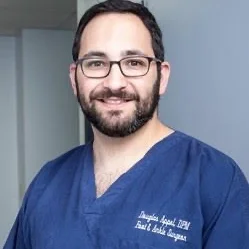
- Guest
- Dr. Douglas Appel
- Credentials
- DPM, FACFAS
- Practice
- Appel Foot and Ankle Center
320 Beverly-Rancocas Rd
Willingboro, NJ 08046
Discussion Details
In this episode of the Specialized Spotlight, we speak with Dr. Douglas Appel, DPM, FACFAS, podiatrist and owner of Appel Foot and Ankle Center. We discuss a range of topics from lateral ankle sprains and Achilles tendon rupture to deviated bunions, plantar fasciitis and orthotics.
Benefit of Watching
If you are complaining of ankle or foot pain, sustained an ankle sprain or Achilles injury, have a bunion, or suffer from plantar fasciitis, this episode is a must watch.
Full Transcript
Okay, here we go. All right, everybody, hello. My name is Dr. Paul Vidal and we are on the next episode of the Specialized Spotlight. Uh on today’s program, on this episode, we have Dr. Douglas Appel, Doctor of Podiatric Medicine with us today. He is the owner of Appel Foot and Ankle Center, um specializing in foot and ankle surgery. So, without further ado, I’m going to welcome Dr. Appel. How are you doing today?
Are you doing? Pleasure being here.
Uh thanks for being with us. We appreciate it.
Yeah, no problem.
All right, so let’s get right to this. People would like to know, um podiatric medicine, how did you get involved? What drew you to this specialty of medicine?
I always wanted to do some form of medicine. I come from a medical family. My mother’s an occupational therapist and my father’s a actual orthodontist, so um kind of always was in the field, always in the home, just helping out people. Um so, I was just kind of looking for a specialty that I could do that kind of fit more what I wanted. Um and I was in Philadelphia and I was had the pleasure of shadowing this one Philadelphia uh podiatrist that took me down to Wills Eye by the fields and we saw a surgery and I I was just hooked from there. So, it’s really nice just to be able to to see that because I’m very, you know, hands-driven, so I like to do things with my hands. And being able to see surgery, but also see office work was was great. So, I I like to see when I when we were in the office also, I was able to see all the patients that actually went out and they were had a smile on their face. So, it was great.
That’s good. So, you like to do things with your hands, you could have been a hand surgeon, not a foot surgeon.
Yeah, yeah. Well, you know, it it helps my wife when I could do the honey-do at home, you know.
Oh, yeah, yeah. Yeah, man, that’s that’s that’s awesome. It’s good to have those value-added skills, man, you know.
Yeah. Yeah, yeah.
So, uh where did you go to school? Uh like medical school of podiatric medicine.
Yes, I went to Temple University. So, it’s right in center city Chinatown. Uh so, there’s the a couple in the in the country. New York and Temple are like kind of the the major ones in the players in the East Coast. So, great education there. Learned from a lot of the Penn Presby old docs there and uh great trauma team there as well. So,.
Got you. Yeah, that’s awesome. Great. And um and then you know, during your you know, growing up, you know, was the I know you said your mom was an occupational therapist, your dad was a an orthodontist, you said?
Yeah, orthodontist, yeah.
Got you. Yeah, that’s great. And then so, was there anything during that time like as growing up that um you know, you know, you know, were you involved in like sports or things like that that kind of aside from your parents being involved in health care or that kind of drew you to to that?
Um I always was interested in sports. I mean, I I did tennis pretty competitive. So, I played it at Lafayette College for like you know, 1 month. But, it’s D1, so you know, yeah, yeah, yeah. So, not not like fully play, but I did like an exhibition. So, but it was a lot of competition there and it was real fun playing with the guys when when, you know, even just around on the club teams and stuff. Um so, it’s fun to get out there. Not so much now. I’m pretty busy with practice, but um I do hit the ball around.
Oh, no. I’ll have to do that. I used to play tennis myself. Yeah, it’s just hard to find someone to hit the ball with, you know?
Yeah, yeah.
Like actually hit, you know? So, that’s really good. The Lafayette uh tennis I mean, that’s that’s legit tennis, man.
Yeah, yeah. So, they’re really they’re really good.
So, actually, you know, I I was going to ask you a little bit later on, but like speaking about tennis cuz we know we we got a bunch of tennis players and stuff. You know, when it in regard to the foot and ankle and like podiatry and stuff, what is the most common issue you would see from a tennis player that involves an injury to the foot and ankle.
Ankle sprains. Yeah, definitely ankle sprains. And sometimes I would say like a plantar fascia injury, maybe a partial tear or rupture. More from a planting cuz it’s a lot of fast movements and planting. So, it’s depending on the surface also. So, you might be especially now they train a lot of the players to do slide on on hard courts. I don’t even know how they do that. They kind of train them to to do that and the Europeans are actually training forehand being left and right. So, literally no back and like that there’s a lot of schools of thought for that. Um but obviously if you’re a fast motion you hit a ball and you got to cut back over to to the other side or get up to the net, it’s very easy to roll that ankle or at least tweak it. And the plant the plantar fascia also is a stabilizer of the foot. So, that also could rupture or tear, which we also see with pickleball.
[laughter].
Yeah, actually I was going to say so it’s interesting. So, you know, people say they want to go into pickleball cuz it’s less demanding but you know, you you you shorten the court and your reactions have to be quicker. All right? So, you may not be running around all the time but like people who are older so I’m going to play pickleball now cuz it’s less demanding and I’m like we see a lot of pickleball issues.
Yeah, I think that it has to do a little bit with the social aspect of sport. So, it’s it’s come on real quick. So, it you know, when you do tennis it’s a higher level that you to actually have fun, you have to practice it a lot. Whereas pickleball you could get to like a decent level pretty quickly. Um but once again, you don’t have that base of the footwork. Right? So, with tennis if you’re a old tennis player, I would say you’re less likely to be the weekend warrior injury because you kind of know where your body is in space and if you’re just picking up the pickleball game, it’s a sometimes it it could be a little bit harder especially if you’re not training for it.
Yeah, makes sense. So yeah, we’ll we’ll come back to ankle sprains in a moment because I have a couple of questions for you on that cuz I I I would agree that’s probably the most common thing we see in therapy from an ankle standpoint is that the ankle the lateral ankle sprain. But yeah, we’ll come back to that. So just in your how you approach treatment and your philosophy of care like you know, what are what would be your driving say core values that you approach patient care?
Definitely treat them like they’re my family. So anything that I would do with my family, my mom or my wife or my kids, that’s how I would treat them because that’s how I would expect to get treated. So with respect, with education, and with the highest regard for their their recovery. So that’s how I kind of being in private practice, that’s why I shot out and opened my own practice was because I wanted to do things that way and I had a standard and I wanted to maintain it. Um and you don’t see it in a lot of other the bigger groups or hospital groups that that sometimes could just be lost in the numbers. Um so I definitely that’s the way I like to treat my patients.
Yeah, no doubt that kind of resonates with me and that’s kind of how you know, as you know, we that’s how we do things over here. So yeah, we I appreciate that. So you know, for you when you deal with a patient and you know, you’re guided by your core values and and obviously we’re we’re driven to to try to get exceptional results. I mean, how would you define what an exceptional result is? You know, obviously besides the person say, "Hey, I feel a lot better." But like what’s an exceptional result for you?
Well, number one is the patient being happy, you know, so cosmesis and and and how things look, the function it all rolls into the same thing. So obviously as practitioners, we have a higher standard set out than sometimes the patients because we might be like, uh, maybe that was like a 90% 98% like finish for me, right? And then and the patient might be ecstatic, right? Or you might see someone come in with an x-ray from somewhere elsewhere and you look at it and you’re like, "Whoa, what happened?" And they’re like, "Oh, it feels fine." So, [laughter] it’s uh I would I would say it’s it’s patient outcome, so how they feel, their satisfaction um is major, right? And then return to function. You know, so activities of daily life is very big. And [clears throat] I bring that up before surgeries and treatments and after surgery. So, I’m I’m very big on educating that and that also rolls into decisions for surgery. So, if it’s affecting someone’s activities of daily life, that’s something that we have to address surgically because we have exhausted obviously all the conservative stuff, which is uh goes back to the core values of treating everyone like you’re a a family member, not just meeting them and being like, "We’re seeing the OR next week." Uh we got to figure out and really deep dive into what’s going on in their background. I do a full chart review for all of my patients if I could get the chart. And sometimes they’re like, "I didn’t even know that it was coming from my back." Or, you know, and that might be a situation where I have nothing to do or in that moment to help them, but they were never pointed in the right direction.
Yeah.
So, whether that’s physical therapy or pain management, I’m able to actually guide them and they’re like, "Thank you so much. I’ve been dealing with this for years and no one’s been telling me what was going on.".
Yeah. Yeah, you might have some lateral leg pain or ankle pain and you have a radiculopathy of L5 S1 or something like that. For those who are watching, that’s, you know, a low back issue that’s causing lower leg or foot pain. So, yeah, no, that’s that’s really good. And then, you know, as a surgeon, it sounds like to from what you just said, if you’re if you can manage successfully manage and treat someone non-surgically, that would be the approach first, unless of course it’s you know, absolutely indicated that surgery is the first thing to do.
Yeah, obviously there’s there’s some non-elective procedures that you know, an Achilles tendon rupture we got to fix, you know, so um there there’s certain trauma situations that you have to do surgery, but for the majority of sports-related injuries, there’s always a shot for trying physical therapy. Um especially for like we were talking about lateral ankle sprains, there could be a torn ligament, but that doesn’t mean that you have to have a surgery. It’s more of if if it doesn’t respond, so for instance, in those cases, I normally give like a I tell the patients I’m going to send you to physical therapy. We’re going to give you 4 to 6 weeks of like a trial. And if we’re not getting any gains while we’re doing the physical therapy, that’s a big indicator that either there’s a tear and we have to get an MRI, or we got a we got to get you into the OR. So that’s how I kind of approach it.
Yeah, that makes sense. And and then sometimes too, like you know, as we see like you know, when they’re initially um injured, you know, the and there’s that inflammatory process, that can cloud the kind of like the true picture of what’s going on if if we can get that to calm down and and and and and and move them along the the kind of the tissue healing uh time frame, then it might get you might get a clearer picture of what’s actually going on, and and then make a more precise uh you know, uh plan of care, so to speak, or treatment options.
Yeah, 100%. I see patients all the time, they come in and I’m like, "Where is it hurting?" And they’re "Bro, there.".
[laughter].
It’s all purple and stuff, yeah.
Yeah, yeah, it just hurts like the whole foot hurts, so and then I wrap them up, compress them, immobilize them, and then have them come back in like set to 7 days. And they come back and they’re like it’s right here and we could actually figure out what’s going on. So, I kind of pride myself on the being a diagnostician in that sense where we could kind of figure out physically what’s what’s wrong with you before we go into imaging.
Yeah, 100%. Yeah, that makes a lot of sense. So, you mentioned lateral ankle sprains. You actually mentioned Achilles rupture. So, I do want to get back to those two, but tell me a little bit more about the more more common things that you see individuals patients for in your office. Like.
Yeah, so plantar plantar fasciitis I see a lot. I also do see reconstructive stuff. So, previous surgeries with scar tissue, the the joints are kind of dislocated, especially at the toes or bunions. So, I see a lot of redo kind of stuff, second opinions regarding that. And then also just delayed stuff. So, I know we’ve talked over over the last couple years just people having them do life, right? And then find or taking care of a loved one. Taking care of a parent. And then finally it’s time for me, right? And then when they come in it’s like, well, it’s kind of end-stage stuff for you right now. So, we’re talking about extra level treatments, you know, or surgeries.
Yeah, and actually we were going to touch about that later on, but now that you brought it up, you know, one of the things I always ask is, you know, what is the cost to the person? I’m not saying dollars, but like of waiting to get treatment. And you know, obviously there’s a situation where a loved one you got to take care of or something else happens to you and then you really can’t control that, but if you were able to, why would someone like why wouldn’t you want someone to delay care? I mean, I think you hit upon it, but like what’s the the the the negative consequence of delaying timely treatment?
Yeah, like I said it we could be as far as a bunion or arthritis say we’ll use that in a a big toe joint situation, so if you have a big bunion or you have arthritis there, we’re talking about either a joint clean up procedure where we just clean off some spurs and give a little more space versus having to fuse it. So, having to possibly fuse the first metatarsophalangeal joint, even for a more serious bunion as well, because you’ll see arthritis when the joint’s not aligned, that you know, you could get arthritis that develops and gets pretty severe and where the deformity gets so much that you have to go to a fusion and you kind of can’t do the regular corrective procedures.
Yeah, and obviously for you know, as we all both know, you know, that first joint that first MTP is a huge thing for gait and push off and obviously they’re going to have some issues there with walking. I mean, obviously they can still walk, but you know, it’s just a little different. Um, but okay, and then yeah, with with bunions, right? So, you know, obviously there’s the bunionectomy and and procedures like that. You know, what’s your what’s your thought on like those like for people who are trying to maybe avoid surgery or treat it on their own like these like these night splints. What do you think of those? Like any of those?
They’re I think their their their place is really when someone’s pediatric, maybe you could help guide some stuff, but realistically there’s very minimal results from that. The biggest result would be to those splints for post-operative. So, more more so in a hold the correction, right? For like the first couple months maybe you want to do that just to allow things to scar down in a corrected position. Um, more so in that, but otherwise it’s kind of a a waste of money. I tell patients that all the time.
Yeah, no, that’s that’s great to hear because you know, we always get that question, you know, hey, if I do the splint, you know, can I fix my bunion?" And.
Or this exercise.
[laughter].
Yeah, this toe is like 90° this way, you know, and it’s like, "Yeah, I don’t think so.".
Yeah, yeah.
So, and then now, what about um diabetic foot care or people who have diabetes and obviously there’s they may be peripheral neuropathies or hey, they need to cut their toenails and obviously there’s issues there like, you know, can you can you touch upon a upon that a little bit?
Yeah, so we use we usually call that at-risk foot care. So, when you have diabetes, you have you’re at a higher risk for infections, [snorts] bleeding, uh and limb loss, right? So, that’s why it’s really important that you have a specialist look at the feet. Um when you have diabetes, it’s usually annually or more frequently depending on your risk categories, meaning like your your your pulses, whether you have blood flow going down there, or also if you have lack of feeling, right? So, if you have neuropathy, that could be a big problem because you might be healthy with everything else, but I find I found all kinds of things in my patients’ feet, in their shoes, staples, you know.
[laughter].
There’s uh cars, you know, like little cars, like, "You didn’t know this was in your shoe, you know?".
Because they can’t feel their foot, right?
Exactly. So, there’s just tons of stuff there and that’s the problem is that a little callus or a little pine needle could go from that to an ulcer and then to an infection and then limb loss, right? So, I’m at the wound center at the Bora, so we do all that with the limb limb salvage there, so. Um very heavily with the wound uh care in the practice as well, but also the palliative stuff for my seniors and just my diabetics as well.
Is there Is there use of hyperbaric chambers over there? Is that Is that.
Yes. So, we we have the hyperbarics, but another question we do get sometimes from some ultra athletes is that it’s not covered for that. So, um yeah, so there’s other indications, but more like bone infections or like necrotizing fasciitis where you see in the newspaper sometimes. Freshwater, you know, stuff getting into the skin.
Yeah. Got you. So, you mentioned athletes and that kind of brings you back to like the lateral ankle sprain and say the Achilles rupture. So, lateral ankle sprain is probably the most commonly you know, common most common injury in the in the foot and ankle when it comes to athletes. And you know, sometimes it happens and what it what results is what they call an avulsion fracture. So, can you touch upon that? Like what is that as a as opposed to just a regular sprain?
So, it’s really the ligaments attached onto the bone, right? And when there’s an avulsion fracture, that just means your ligament was stronger than the bone at that day, you know, so your that ligament pulls off the bone and it takes a piece of the bone with it. Now, it depends on how big of a piece that is and what the you know, what what what the velocity of the of the injury is. A a car accident’s going to have much different injury pattern than a tennis lateral ankle sprain. You know, it all depends. But I have seen some significant ankle fractures and dislocations from just someone falling from being passing out and their whole body weight coming on down on their ankle in a weird spot. But that’s avulsion fractures are really just a ligament pulling off from the bone.
Now, is that an immediate surgical indication to treat it or can that be treated conservatively?
So, you could treat that conservatively depending on the size and where that bone is.
Sure.
So, especially in the ankle if the fibula is displaced, meaning that’s not where it should be, it’s surgery. Or you need or if you can’t reduce it back into place, So, of times we’ll close reduce it or in the ER they’re close reduced. But, um if it’s in alignment, usually we immobilize everything and give it some time to to heal up and scar down. Cuz the biggest thing even for surgeries is creating scar. So, the the goal for any of those like a lateral ankle stabilization is creating a scar. So, the initial uh procedure that was, you know, years ago was the Brostrom procedure where we basically just sew the tissue over. You You take the ATFL ligament, which is one of the major ligaments on the outside like the ACL of the ankle, and you sew it back together and sew the capsule on top of it as well, and you’re just hoping it will have to scar down and create stability on that side of the ankle. So, if it’s pretty stable though when you do the tests and you do an anterior drawer test just like with you see the athletes on the NFL field and they’re down pulling their ankle and they do the ACL test to make sure that that’s not ruptured. Same thing if that’s uh unstable, your ankle’s unstable, and you’re just not feeling like you’re able to walk, that would be a surgical indication as well. So, we kind of you have to look at the whole picture. It’s not just like one little thing.
Absolutely. And then for those individuals who have recurrent lateral ankle sprains and they they Yeah, you have one, they get it again, and so forth, and they don’t want maybe surgery’s not necessarily indicated or they don’t want surgery. Like if what’s, you know, how do you manage them conservatively there to like, you know, what’s the goal there if they if they have a history of lateral ankle sprains?
Yeah, Paul, that’s that’s interesting. I think that like in the last one to two years, there’s been actually a lot of literature out that has been pointing towards actually treating these uh type of re- repeat offenders with surgery and be more aggressive with surgery because it’s going to reoccur. And also that the tissue might not be good tissue. So a lot of times are the lot of the studies are putting in a separate suture um anchors and stuff like that that is going to replace your ligament that’s not good cuz obviously it’s not strong enough. It might be repaired and then re-ruptures. But if it’s continuously rupturing or injuring then you’re really stuck in a brace or KT taping.
[laughter].
Kinesiology taping that no brainer. Um the ankle almost every time you’re playing. So.
Yeah, right. You got to give it some support uh external support. Now I guess if that works and you’re okay doing that then great. Uh but if not yeah that doesn’t leave you few doesn’t leave you with many options in terms of what to do in terms of stabilizing it. Um okay. And then um it seems like in the last couple years Achilles ruptures are like I mean for lack of a better term exploding. Like like is there something to it? Is what’s happening? Like you see it in the NBA and the NFL. It seems like more and more of these athletes are having we’re seeing it more frequently. Is there a reason for that? Like what do you think?
It’s hard to tell. I mean obviously you’d know better with the stretching routines. But they they definitely I don’t know when they switched over from static to dynamic. And less less lengthening and more keeping the fast switch. Um so I think there that might have a component to it because you’re just running tight. Just because you want that competitive edge and you don’t want to be too loose, right?
Yeah.
That’s you know you see them warming up. They’re not stretching out like we used to do like in high school gym, you know, all right over to the right. They’re not doing that, you know, so um I think that has a component to it because I think it’s like you’re you stretch plus the overworking, right? So.
Yeah, I was going to say that we may be overloading to some degree or just maybe overtraining, maybe not enough recovery. You know, I don’t know what the answer is, but I was curious to see what you thought about that.
Yeah, I think the stretching has to do with because there’s a lot of the obviously the the textbook answer is weekend warriors and pickleball or something like that, but I think that it it’s more than that. There’s there’s calcification, there’s diet, there’s a lot of things that go into it.
Got you. Got you. Okay, so yeah, we got a good sense of what you see and I I do want to ask one more question on like a condition where people always ask cuz hey, man, my feet are flat, okay?
[laughter].
So, you know, you know, what do I do for my flat my flat feet and and you know, where do you see the role of something like orthotics in the overall management of someone who has, you know, significant say pes planus or flat feet?
I think it’s very significant. So, I I use orthotics a lot in my practice. It definitely helps out with that in mind even though someone has a super flat foot I have to take the actual patient into consideration what shoes they wear, right? And then also what what activities they do. So, you can’t give a bulky hunky really super supportive textbook orthotic to a a sprinter that’s going to be in a sprinting cleats, you know?
Yeah, yeah.
Um so, that might be a carbon fiber insert. A a female patient that’s like, "Listen, I wear my sneakers to the gym, but I’m in flats and and other things during like 90% of the time." You have to accommodate for that. But the orthotics are what actually makes biomechanical how your body moves, it corrects that almost like eyeglasses. So, it when you’re not wearing it, your flat foot doesn’t go away. It means that it’s correcting it when you’re wearing it for that time. Just like glasses are when you wear it all day, you take it off and you’re perfect eye vision, you know, it’s it’s only when you’re wearing it. So, it helps out it helps prevent injuries. A lot of the D1 athletes, you see the NBA, they all have orthotics because it’s a preventive. You know, it’s it prevents any injuries and prevents overload on areas that shouldn’t be loaded.
Gotcha. And then, you know, fully customized orthotics as opposed to going to the store and getting something that’s CVS or something, you know what I mean? Like what when does a person kind of go towards over-the-counter versus customized or should it be customized to their specific I guess alignments, positions, type of thing?
Yeah, I think there’s there’s actually there’s room for both. So, I see it for both. Um getting back towards like my runners. Like perfect example is my runners. If I was going to fix them completely with a with a custom orthotic in a textbook sense, they wouldn’t like it because when you’re running and then you’re in mid mid mid stance, you’re just going to be like, "Ah, something’s stopping me from moving.".
Yeah, yeah, yeah.
So, we create a custom device. So, a lot of my runners do like it when I do a custom one because we’re able to make a flexible one that lasts longer. And if you So, an athlete is going to be putting a lot more reps on that device. So, you might get an over-the-counter one, but you’re going to burn through that real quickly, especially if you’re a runner. Marathon runner, that’s that’s that device is going to be used. A lot of times orthotics will last like two to five years depending on how much you know, how much how many miles you’re basically putting on it. The over-the-counter ones, the problem is there’s just way too much out there to curate. You know, I have patients come in like you the Dr. Scholl’s, they have the different colors and when you go into Walmart and you know, blue, orange. I’m convinced they’re the same exact device just different colors because I don’t know how standing on a device and you’re like, "Oh, you’re a blue. You’re an orange.".
Yeah, yeah.
It’s just a soft pillow for most majority of them. I’ve had a couple patients talk about the Good Feet store and that’s not even custom orthotic, either. And that’s $2,000 or more. Yes, it’s it’s been hiking up and that’s just an over-the-counter insert.
Got you. Got you. Okay, I know I appreciate that input on there and I’m sure people watching this would appreciate that as well. So, now if someone is having a foot and ankle condition or just issues with their feet, like what’s, you know, what could you tell them, you know, what’s one simple step they can do today to kind of kind of to prioritize their foot, ankle kind of overall health? You know, what’s one kind of simple recommendation you make to patients?
Stretch. You know, like stretching will help out and proper shoes. Those are the things that that that protect your feet. You know, and and the ligaments and the tendons and the muscles around everything. And it’s very easy just to wake up for work or wake up and do your sport and then come home. But if you’re not doing those things and have the proper gear, then you’re asking for injury, you know?
Got you. So, it would seem obvious to me, but what would make someone say, "Hey, I need a new pair of shoes?".
[laughter].
So, it’s it’s hard because a lot of my athletes don’t know it until they’re in immense pain and their shoe they look at their shoe and it’s like, "I think it was my old shoes." And it’s it’s really, you know, like the elite runners and stuff, they have like a a mile count and they switch it out. Like they, you know, they they know that if I’m did this many miles on this shoe, you know, it’s not like I’m just going to work out and like they actually do a mile count cuz if you’re doing it a lot, you’ll know like this shoe wears out at this time, but everyone should be checking out your shoes. The problem is with the with modern materials, you look at the bottom soles and they look brand new. Yeah, you look at the bottom you’re like, I don’t think there’s any wear. Whereas, you know, even like 15 years ago the outside would counter would look like it’s all flattened and so it’s hard to really tell, but really mashing on the shoe and seeing if it’s not as it’s not as supportive as it was when you were in it. Plus, whenever you start feeling that you’re not getting supportive or it’s getting a little achy, probably time to change it. So, probably like every if you’re a big runner, maybe every like 4 months you might have to change it out.
Interesting. Yeah, I I I think and I may be wrong here, but I believe there’s a shoe that I mean they’re they’re marketing it to like the marathon runner. You like wear it once. And that’s it. And but and it’s like this high performance high like premium like item people buy and it’s like made to be worn once and that’s it. Like I I don’t know I could be not misquoting but misremember, but I I believe there’s something out like that and that just seems crazy to me. You buy a pair of shoes and you you use them once and that’s it.
Well, it’s it’s more of a competitive edge with that. So, the different the different kinds of shoes have different purposes, right? Like a work boot a work boot has a purpose for one thing, but you’re not going to wear it to run or to play tennis in, right? So, um there’s kind of been a death of the cross trainer. I find there’s not really like a cross trainer out there. A tennis shoe would probably be the closest where we see lateral motions and and I mean you’d be able to talk to me a little bit better with CrossFit shoes and stuff like that cuz there is a lot more lateral movement, box jumping, and stuff like that. But, in a running in the running world, it’s about how light could I make this and how fast could I go? Right. So, that’s what I I haven’t heard of that shoe, but I’m guessing that what that’s what’s going on where you’re sacrificing the material and longevity because you don’t need as much material because you’re expecting to throw it out after the marathon.
Yeah, that makes sense. Yeah, I’ll have to search that and I’ll send it to you because I I’m pretty sure that that’s out there. So, but yeah, that’s great advice. You know, stretching. You know, I find like people’s ankles are stiff and their gastrocnemius muscles going into the Achilles are stiff and yeah, that has implications on the Achilles, what have you. And then great, you know, proper shoe wear, absolutely. Even for the older adult, proper shoe wear is so important. So, Okay, so, um to kind of wrap up a little bit here. If if someone is um you know, having a foot and ankle issue, like what’s the best way for someone to get in touch with your office or to book a to book a an appointment?
Well, um really easy is you go to njfeet.com.
Oh, that’s great.
[laughter].
Yeah, so it’s it’s really easy.
One?
Uh the NJ foot was taken.
[laughter].
Yeah, that’s it. That’s it.
So, but it’s very easy. So, njfeet.com. On there is my main website, so you can check out all the stuff and you can also book your appointment straight through the website.
Okay, cool.
Yeah, so you go through there all all the information is in there.
All right. And then for a first-time patient, what should they expect on their first visit? Like when they first come to you guys?
So, there’s new patient paperwork. We try to keep it as uh minimal as possible, but obviously there’s regulated stuff like HIPAA and and privacy stuff that we have to have you read and sign and some general like touching on um how I treat my patients. It’s not a number, so we ask for a short medical history at least, you know, so we kind of see what’s going on with you, allergies and whatnot, which is basic. So, I’ve really we’ve really tightened it down to like four pages and really one one page back and front that’s the writing and the rest is signing. So, we’ve we’ve got it down. So, it’s really the paperwork and then you’ll come in you’ll meet my great staff, very friendly. Um and then you’ll just get me. So, that’s why it’s kind of like that great you know, private practice experience because you’re just going to get me. You’re not going to get a bunch of other people or another associate that you didn’t see on the on the page. It’s just me. So, um same level of care.
Excellent. And that that’s great for continuity for when you have to follow up with them or if you’re going to see them down the road. That’s great. So, uh anything else you would want our audience to know about you or about foot and ankle? Any like uh final take home message here?
Yeah, the biggest thing is is stretching. Whenever we we always shoot for conservative. Uh obviously Paul and the Specialized uh physical therapy has helped out a lot of my patients. Um get back on their feet after surgeries, before surgeries, without surgeries. Um just a great team over there. So, I thank you guys. And um yeah, it’s it’s just really my my main goal as a podiatrist is seeing my patients leave happy. And that’s one of the main reasons why I went into it is because when you redo podiatry, you can actually treat the patient. That’s what I was saying with the hands-on. And hopefully at the end of that visit uh new patient visit, you leave with not just answers, but hopefully a treatment or a fix where you’re maybe not 100% better, but 30% better. Which is what drew me to the to this field because you can see your primary and then it’s like we got to check out and look at numbers, but you’re not feeling any different. You’re not feeling that immediate there’s something going on here.
Yeah. All right, got you. Uh this has been excellent. I really appreciate you joining us tonight. I’m sure the viewers when they watch this will appreciate too. I learned a lot here. Hopefully they’ll learn a lot as well. So Dr. Douglas Appel, thank you very much for joining us today and and we’ll talk to you soon.
All right, thanks Paul.
You’re welcome.
Book Your Visit
Ready when you are.
Request a time and a real person calls you back, usually within two business hours. No phone tree. No ‘someone will reach out.’ Just a plan.
- Hours Mon–Thu 8am–7pm, Fri 8am–2pm
- Prefer to talk now? Call either office. Cherry Hill 856-424-0993 Burlington 609-880-0880
- Same-week appointments available
5.0 · 607 Google reviews
Typical response: under 2 business hours
Step 1 of 6
Request sent.
That’s the hard part done. We’ll call during business hours to lock in your time. Most people are on the schedule same week.
Visit Us
Care this good, this close.
Specialized Physical Therapy – Cherry Hill
Specialized Physical Therapy – Burlington
- 11 Cadillac Road, Burlington, NJ 08016 (opens in a new tab)
- 609-880-0880
- Fax: 609-227-4423
- frontdesk@specializedphysicaltherapy.com
- Mon–Thu 8am–7pm, Fri 8am–2pm