
The Specialized Spotlight
Interview with Dr. Ashmit Gupta
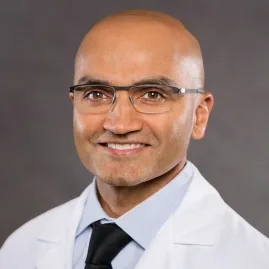
- Guest
- Dr. Ashmit Gupta
- Credentials
- MD, MPH
- Practice
- ENT and Allergy Associates – Voorhees
200 Bowman Dr, Ste D285
Voorhees, NJ 08043
Discussion Details
In this episode of the Specialized Spotlight, we speak with Dr. Ashmit Gupta, MD, MPH, an otolaryngologist and head and neck surgeon from ENT and Allergy Associates. We discuss a range of topics from dizziness and vertigo to deviated septums, headaches, and Meniere’s Disease.
Benefit of Watching
If you are complaining of dizziness, vertigo, balance problems, headaches, tinnitus, hearing problems, swallowing problems, this episode is a must watch. Learn what you can do to feel and get better!
Full Transcript
Hello, everyone. Thank you for joining us. My name is Paul Vidal. I am the owner of Specialized Physical Therapy in Cherry Hill and Burlington, New Jersey. On today’s episode of the Specialized Spotlight, we have an individual here with us that we have known for 20 plus years, and we’ve come to trust him as a leading expert in examining and treating patients with dizziness, vertigo, balance disorders, as well as TMJ and headaches. We are truly grateful for this, and we are thankful that he can join us today. So, without further ado, I would like to welcome Dr. Ash Gupta, otolaryngologist and head and neck surgeon who works at ENT and Allergy Associates, Dr. Gupta. Thank you for joining us today.
Thank you so much, Paul. It is. It has really been amazing. It’s been over 20 years. It’s been a great working relationship and partnership and friendship, and we really appreciate all the work you all have done with our patients.
Ah, thank you. That’s great to hear, and we do. We really appreciate you guys as well. So yeah, let’s get right to it. So, what initially drew you to the specialty of ENT or otolaryngology
What is interesting? I mean, a couple of reasons, but I actually had nasal surgery myself, so I had a septoplasty. I was in Little League, and I was a pitcher, and a ball hit me in my nose, and I ended up having a deviated septum. So in college, I ended up having a septoplasty. Just kind of went through that process, and I was like, okay, this is really interesting. So I started. At least it was on my radar. I’m with a family friend who was an ENT. So you know, that’s a couple things now. A couple little things going on in terms of you know, kind of planning it in my head. But really, what it was was during med school, something about ENT was fascinating because it was really focusing on the senses, just the idea of taste and hearing and smell, and this was fascinating to me. And I liked the fact that it involved surgery and medicine. So a lot of kind of very variety. There are pediatric as well as elderly patients. So we were kind of we kind of treat the gamut. And so, yeah, a lot of reasons.
Yeah, no, that’s interesting. So, I didn’t know this about you. So, you got hit in the head by a baseball, or
yeah, I mean, exactly. So, I was a pitcher. I was 12 years old, and you know, I didn’t have a really fast ball, but I my was my my specialty was like the slow ball, and I was getting getting you know batters at all the time, but one of them just came right back at me. I did not have the ability to stop it before it hit me.
Wow! And and speaking of senses, did you like have any alteration any of the senses after having that and getting a deviating septum? Like, you know, how can like others maybe relate to that. Like, what did you experience?
It wasn’t a change in sense, but I will tell you, I definitely had problems breathing. And you know what? You don’t think about it because this is how I normally breathe. But I realized when I’m sleeping, and I’m lying on one side, I can’t breathe. When I’m lying on the other side, I can. But I just thought, well, I guess everyone’s like this. Didn’t think about it. It’s crazy because my dad was a doc as well. But you know, we just kind of think this is how it normally is, and really wasn’t until later, when I was in high school and college, I really started complaining about this, and then we went to my dad’s friend, who was an ENT, said, “Yeah, you are basically over 50% deviated. So yeah, it kind of just made sense at that point. Like, okay, all these symptoms I may have been having are related to something. It’s a great teaching point to keep in mind. I mean, there are things you may be dealing with that’s thinking, “Oh, you know what? I guess everyone has a bad sense of smell, and when you’re interacting with family members or friends, and they realize, no, you’re, you know, that’s a rare thing for you to have. So, keep that in mind. If something doesn’t make sense, and other people don’t have it, it’s worth getting evaluated.
Yeah, yeah, that’s great. And you touch upon something that we’ll talk about later, and that’s definitely following up with with deviated symptoms later and how that might be treated. So, where did you go to med school?
So I went to undergrad at Penn, and then I went to med school at George Washington University in D.C. I was there for med school and residency, so I spent a lot of time in DC. Really loved it. It was actually what’s called a combined program. It’s an MD MPH. So at the same time, within four years, I got my MD as well as my master’s in public health. It was, I mean, looking back, it was a lot. I mean, we kind of didn’t have any summer. Doing classes all the time, but I think overall it was helpful.
That’s great. And you know, from this this combined program of an MD MPH program, do you find yourself? I mean, have are you getting much into the like the public health or policy aspect of this?
I had been, you know, when I was in med school, I kind of definitely was a lot more actively involved because you’re in D.C. It’s like kind of in like the late ’90s or early 2000s. So health policy was a big deal. Like I think, I think at that time Clinton was in office, right, or something like that. So you had a lot of conversation about health policy. Yes, so that was one reason I was have I’ve always been interested in kind of the business of medicine, so that kind of you know shone a light on that, and also makes it a little bit easier to read through studies if you kind of get a sense of okay, how do you read through studies a good study, bad study, odds ratio, stuff like that?
Yeah, yeah, yeah. I I can totally relate to that because yeah, you can read something like a study that seems great, and they have like three people in the study, and that’s probably not too strong of a study. But yeah, so you know, going to your specialty, you know, when did you realize that like had a like a deeper meaning to you other than like the medical portion of it. Like the question is like what you know what is your why here that that that that you pursued this and maybe you answered that already with your background your personal background.
No, I think it’s a great it’s a great point. I mean, here’s the interesting thing: I had even though I had been having all of this exposure to it in med school, I really didn’t have a dedicated ENT rotation, so I was actually going to go into cardiology. That thought, you know, I thought it’s really interesting reading EKG stuff like that. So I’d done my I had done all of my interviews for med school, and I mean for residency, and was going to consider cardiology afterwards. But during the interview process, I’m you know visiting like 10 to 15 places, and during that time, I did a two week rotation at the Wall Street Army Medical Center in ENT. Like you know what, I have to do these surgical specialties. You know why not knock that out? And I was blown away, and I kind of rediscovered my interest in this field, blown away by the variety of surgical surgical kind of cases going on. Within two weeks, we saw a big head in cancer surgery. I saw, like, a facelift, advanced neurological, like neurosurgical type procedures. Like, wow, this is all in ENT. I thought it was like a lot less than this, so I realized there’s so much there, and that’s what really kind of made me rediscover it. So I actually dropped out of the match at that point, did a year of research in ENT, and it ended up going to ENT at that point.
Ah, man, that’s amazing. How you know you think you want to go one way, and then it leads you somewhere else. That’s definitely a life lesson there. So, you know, along the way, you know, no matter which way you chose, you know, what guides you in terms like your core values, like what are your tenets that just kind of guide your decisions there.
Yeah, definitely. In terms of the patient care, you’re talking about right.
Yeah, sure.
Definitely. Yeah, like definitely being comprehensive, right? You have to obviously like being very thorough in terms of history examination, everything else. That’s number one, of course, more important than anything else. But what I do want to kind of keep in mind is being a little bit more patient and approachable, right? A lot of patients are like, “Oh my God, the doctor is kind of up here, and we’re down here. They don’t feel as comfortable asking questions. They are hesitant to kind of bring things up, and you want to be approachable because all of a sudden you may get more insights than you were expecting about what may be going on in this person’s life that’s affecting their disease process. So the approachability, I think, is huge. Sometimes I’ll call people back, and I’m like, “Oh my God, I can’t believe you called me back! You know, they’re expecting like the medical assistant to call back, or the nurse, or whatever it is. So that’s really huge because I feel it’s a different type of connection. You want to be comprehensive, of course, but approachability is important. I talk about stuff like patience. I mean, listen, you know what? The first time you tell someone to follow a reflux diet, they may not do it. You know, and you can, you can kind of be like, you know, I get it. I mean, this is hard. It’s not not that easy. If you’ve been into spicy food your entire life, it’s hard to like just change on a dime, right? So you have to be be patient with them when when you come back. It’s how many times I I I hear people say, “Oh my God, I thought you were gonna be angry with me. Like, no, I mean. We’re here to help you, so I get it. I understand it’s hard, so okay. Let’s okay, you’re making these changes. It’s great. Let’s make some more changes here. Talk about hydration stuff like that. And if you’re patient with them, they’ll get there. If you’re impatient and kind of dogmatic about it, sometimes it just doesn’t work. You know, I mean, so I think that’s important. One thing I also kind of focus on kind of being persistent and relentless, and what I mean by that is like things like tinnitus, things like dizziness. Sorry to say this, some ENT, but like I’m sorry, you know what? It is what it is. You got ringing in your ears. You’re gonna have it your entire life, and I like never try to say that or anything like that to someone. Like, give let’s give them another shot, give them another chance, another option. Try these supplements out. Do this physical therapy. Maybe look at hearing, and I’ll have them come back because it’s like, okay, I think I have some improvement here. Okay, great. Let’s keep on going with this, as opposed to writing them off, well, sorry, it’s something you’re stuck with. Good luck, because that obviously, like, it’s something like tinnitus, something like dizziness. We are surprised by how much of it can be improved by placebo, like help with it, help them with the medical therapy. But some of them just knowing, you know, someone’s here with me to help me through this. That’s why I really like what you all do as special as physical therapy, because in addition to kind of treating them, I feel as if, and what the feedback I get is that you’re really kind of there with them through the process, and that helps a ton, especially with stuff like tinnitus and dizziness.
Yeah, right. Exactly, and it’s kind of like pain. It’s very multifactorial, and if we can just you know approach it in that mindset, we can definitely help people for the most part. And you know, thank you for sharing those insights because I’m sure patients really appreciate the accessibility and the clear communication that makes a big difference. So thank you for that. So along with that, how would you define what is like an exceptional outcome for you for people, and not necessarily beyond the clinical, you know, beyond the clinical outcomes. Like, what’s an exceptional outcome for you?
I think an exceptional outcome includes some kind of connection, as they had never been to an ENT before. Now they came to an ENT. You only you not only got that success in terms of treating their condition. You’re able to connect with them. They feel comfortable with you. They refer other patients to you or family members, whatever. So that connection, I think, is another level in terms of getting the outcome that’s really best for the patient.
Yeah, no, I agree definitely. Yeah, they they don’t they’re not being seen as a number. They don’t feel like their number that they’re being heard and listened to, and it’s it’s a very personable approach. So yeah, agree. Okay, so what type of conditions, or what what’s your favorite condition, or what are you known for in terms of treatment or an examination? I think the main,
yeah, like the main thing. Obviously, I do most, you know, pediatric ENT, right? Adult P and T, adult E and T. I definitely do kind of the basic ear, nose, and throat conditions. I focus more on nasal and sinus conditions, head and neck cancer, for example. I would probably refer you to one of our other docs in our practice who has a lot more experience with that. I do have some special interest in voice as well because our chairman in our residency was a voice doctor, so we did a lot of voice treatment, whether that’s evaluation, surgery, stuff like that as well.
Gotcha. And for someone out there who’s listening, you know, what are some kind of early symptoms or signs that they might be experiencing that that they shouldn’t ignore that should prompt a visit or you know at least talk to their family physician about or see an ENT such as yourself.
Yeah, so I guess one thing would be what I tell people is that we only see you for like 10 minutes, right? But you’re with yourself 24 hours a day, right? So what does that mean? I mean, is this if there’s something new going on that was not there before? Even if it’s like I don’t think it’s a big deal, pay attention to that. If something was there but has gotten recently worse, like you’ve had some militants, and all of a sudden tinnitus is way worse, it’s pulsing. Well, that’s a big deal. So at least something to keep note of and get evaluated if it continues. But even more than that, sometimes it’s subtle. Things it’s like people will come and duck. I just have a feeling something’s up, and they maybe have your mild sore throat, and easily someone else will be like, whatever. I have a sore throat. I haven’t had it for a couple of months now, but whatever. I’m not really too bothered by it. It’s like one out of 10 or two out of 10. I’m not really bothered by it. But if it’s something new you never had before, here’s why. There are conditions that have very subtle symptoms until it’s too late. You can have something called a base of tongue cancer, right? And it’s down in your base of tongue, a little bit of sore throat, and by the time the sore throat is like okay, really bad at this point. I can’t swallow. Well, now it’s really big, right? So if you catch it early, makes a big difference in terms of that evaluation. So anything that’s new, anything that’s worsening, but even if you just have a gut feeling, like you know what, this voice issues, something’s off with it. Worthwhile.
Yeah, well said. Yeah, definitely. Well said, and agree. That’s that’s that’s a great point to make. So now it’s interesting that initially you wanted to go into cardiology, right? And and then here you are with ENT, and that links in the vestibular system, the balance system, and a lot of times when we see someone with dizziness. We’re trying to get a true sense of like where the origin of their dizziness. Let’s say because that’s one of the primary complaints people have to their physicians. You know, in a very general sense, like how would you kind of differentiate dizziness from a cardiovascular standpoint from say ears, nose, and throat vestibular origin?
Yeah, got it. A lot of people use the word dizziness, and unfortunately, dizziness is a generic term, a general term. It can mean a lot of things. So the first thing we want to kind of determine: okay, are you having spinning sensation? Is it more unsteadiness or leadenness? Those little three kind of categories you can, if you can, kind of more deeply define what’s happening. Usually, if it’s spinning, more likely going to be inner ear or ENT related, because and even if it’s spinning, like not necessarily spinning when you’re changing positions, but just spinning in general, a sense of okay, I’m moving. The world is moving, but there’s some kind of sense of motion, most likely e and take, right, or e related. If there’s unsteadiness, more likely overall. I mean, obviously, it can be other things as well, but more likely neurological to a certain extent. There’s a little unsteadiness in how you’re walking, something about your gait, how you’re walking. I’m always leaning towards the left, or whatever it is. That is something more neurological overall, right? And lightheadedness. Well, that’s a big one. Lightheadedness definitely can be cardiac, can be pulmonary. Sometimes it can just be dehydration. Sometimes I tell people, “Hey, just you know what I notice is because a lot of people these days are dehydrated, and that that is a big big tip that I give to people. Six to eight cups of water; they’re like, okay, doctor, sounds good. Does that count? You know, does coffee and juice and soda count in America? I definitely get that. Like, no, no, no, that’s not count. It doesn’t count. Six cups of water, and sometimes you just be like, okay, listen, you know, try this out. Just do it for two weeks. Just do it for two weeks, and then come back and see where we are. And sometimes they come back. You know, I feel better already. Like my dizziness got better, but not not only that. Some of my joint pain got better. Like other stuff is like, oh my god! Like I have been dehydrated, and it is causing a lot of symptoms in my body, and a lot of them are getting better.
Yeah, I would agree. Yeah, we definitely talk about adequate hydration with all our patients, especially the elderly folks. Not only in the summertime, but I’m in the wintertime too. And yeah, because dehydration is a big thing. So you know, they don’t want to do it because they always have to go to the bathroom. But it’s you know it’s something that is so important because it it serves the whole body, all the systems. So, okay. So now, when you have determined that someone has a true inner ear or vestibular problem, right? You know, and obviously you see the importance of, but like in your mind, what what do you see the role of vestibular rehabilitation, the overall management of someone with dizziness and vertigo.
Yeah, got it. Very big role, honestly. Like in terms of vertigo, if you know, okay, it’s vertigo, right? Meaning that there’s a spinning sensation. There’s only a handful of treatments for it, right? I’m obviously like we kind of do a full evaluation in the office, history, physical examination. Is it positional? Well, that’s a big deal. There’s kind of a bifurcation of symptoms. Like if it’s positional, most like it’s something called benign positional vertigo. What does that mean? You lie down in bed, and all of a sudden you start spinning for a few seconds or a minute. You know, if you. Great for a little while, maybe when you’re turning, maybe when you’re driving, something like that. Any kind of positionally related symptom that most likely is in the category of benign positional vertigo. Okay, so that can be very, very well treated with physical therapy, and you know mostly mostly balanced therapy. Sometimes it can only be a few sessions. I mean, one or two sessions, and all of a sudden they’re pretty much good to go. So, let’s say it’s not positional, still vertigo, right? Obviously, we have to rule out things like something called vestibular neuronitis, which is more of like, or labyrinthitis, right? Which is more of like a viral condition and can be very severe. Hydration, stay at home, relax for a few days should be okay. We have to also determine and make sure it’s not something called Meniere’s disease. Ménière’s disease is vertigo with tinnitus and hearing loss. Different treatment for that, mostly, you know, restriction, that sort of thing. Okay, but let’s say it’s vertigo, not necessarily positional. Then there’s a rule for something called vestibular retraining. So usually, like we’ll have them go to therapy, and they’re there for a while. Takes several, like you know, maybe several weeks or months to kind of get them back to where they were, and it does. It always helps. Of course, in addition, we talk about hydration. We talk about stuff like meclizine, right? Meclizine, Valium. These are medications that can work. But we all tell them these are not curative, but they will help you manage your day. You got vertigo. You still have to go to work or drive, whatever it is. And low doses of these medications can at least help you kind of keep productive.
Yeah, no, yeah. Thank you, that’s excellent. So, you know, we talked about when someone is maybe experiencing symptoms. Maybe it’s new. Maybe it’s a change in what they’re feeling, or they’re just not sure. And you said it could be something that’s just starting, and you wouldn’t really make mention of it. But then it progresses. So you know what happens when you know what’s the cost or the negative consequence for someone just delaying action or seeking care.
Yeah, I mean, I guess there’s a couple of different categories. I mean, obviously, you can have, you can miss something, meaning like if you have a base of tongue cancer, for example, then it just takes a little bit more to get it treated. You know, once it’s diagnosed, obviously surgical management, maybe radiation, maybe chemo. Right? If you’re having significant vertigo or significant TMJ tinnitus, maybe significant sinus disease. Let’s say you’re having congestion, and you’re having yellow-green stuff coming out of your nose, and then you wait for a while. I mean, it’s just a worse infection. Now you’re not, let’s say, a sinus infection. You can have what’s called acute sinusitis or what’s called chronic sinusitis. You come in; it’s been a week or two. You treat it with a course of an antibiotic and a decongestant. Pretty much good to go. But you’ve had chronic symptoms for months. Now we need three to four weeks of an antibiotic. Further evaluation, allergy testing, CT scan, that sort of thing. So, in general, getting it early is going to be helpful. So that’s probably also in addition. Yeah, it’s just something to kind of keep in mind. Like, it’s a better way to kind of think about your health.
Yeah, yeah, no doubt. So we talked about a little earlier, and I and I said we we would come back to it, and without giving us the full like descriptive techniques you do and everything else you to to to do with this procedure, but if someone has a deviated septum, you know the the basic, you know, what do you do for that? How does it get fixed?
Yeah, got it. So first of all, we we get evaluated, right? So I mean, they can come in the office, and the main things we’re looking at is okay, are you having congestion? Congestion, I feel, is like when you’re exercising, you’re always mouth breathing. You know, whenever you’re running and things like that, is I can’t put that in my nose. Interestingly, sometimes you can have other symptoms. We have had. I remember one of my earliest patients when I just started. You know, after I met you, I think back in 2005, 2005, 2006. This lady had come in, and she’d been having headaches, severe headaches, facial pain, pressure, and headaches. She had been suffering for like years, right? She had gone to a headache specialist in Switzerland. I mean, this is the kind of like level to what she was dealing with, tons of different tons of different medications, and she came in when she when I first came in when she first came in the physical business. She was very disheveled, right? I mean, just you could tell this was affecting her entire life, right? I was like, man, you got here, you got pretty. I mean, you got. You know you’ve covered everything else. You see a neurologist and everything else, and headache specialists. But you have a very significant DV, deceptive, right? And I know that that may not be something that you focus on because you got the facial pain, the pressure, and the headaches. But let’s see what we need, what we can do here to help you. So how we did it is what we do. Deceptum is cartilage and bone, right? And it’s all done. Surgery’s done. All done inside your nose. Why do I tell them if surgery takes about 30 to 45 minutes, right? It’s all done inside your nose. Of course, it is under anesthesia. You’re going to be asleep for it, and then it’s in and out. You go home afterwards. You do need about a week to recover. What do you do? The septum is collagen bones covered by a membrane, so we elevate the membrane and trim the crooked areas of collagen and bone, and put the membrane back. So now the septum is straight, right, as opposed to crooked. Usually, with the septoplasty, we do something called turbinate reduction. So turbines are structures on the side of the nose. They’re normal structures. They warm, humidify, and filter air as you breathe. So they’re important structures, but they’re big. So we just reduce them in size. So so they’re usually together septoplasty turbine reduction, and that’s pretty much it. So now, when I was a kid, I had the surgery done. We did it. Back then, the field was different. They did pack it, so I had literally had six feet of Vaseline gauze stuffed inside my nose, and it was kind of layered in there. And I could I had no idea all this could fit in your nose. But what we don’t realize the nose is not just this; it goes further back. So the worst one of the worst days of my life, I still remember to this day. It was like, you know, over 30 years ago, I came in and the doc had to take the packing out, and literally, like, there was no way to make it numb. You basically, it just felt like my brain was coming out. It was the most horrible situation, and it was a horrible feeling, and so interestingly, I don’t do that to people. So I I tell people I don’t put packing inside your nose. Sometimes I put a hollow silicone splint with a compromise. You may need a little more, but the pain is significantly less. And I’ll have patients that they don’t even take a pay bill, right? It’s not great. It’s not comfortable: scabbing, crusting. It’s not going to be comfortable. You’re not going to sleep that great for that week, but otherwise, I think the compromise is worth it.
Yeah, I can’t imagine so much happening to her. What’s that? I can’t imagine six feet of gauze coming out of my nose.
Yeah,horrible. It was so horrible, even to this day. But here’s what was really interesting: what happened to her. So she had the surgery, right? And then obviously the recovery and everything else. And then a few weeks later, she came in. I couldn’t even recognize her. She had like her hair was done, and you know, all put together, and I was like, “Oh my God! Like she cared so much more about how she was presenting. She was feeling so much better. Headaches were gone. It’s like I realized that something we could do can completely change someone’s life, and like I will never forget that.
Yeah, yeah, that that’s amazing. That’s powerful, life-altering stuff. And for what is relatively, I would think, a simple procedure from your standpoint, even though there’s recovery there. But that that’s great. I mean, probably no more headaches and head pressure. I’m assuming with that. Wow, that’s fantastic. Excellent. Okay, so of course that’s really good. Course, headed. Yeah, that’s that. All of them had been ruled out.
Yeah, gotcha. Understood. Okay, so what’s one kind of simple step someone can take today to kind of prioritize their health before they even come to your office?
Well, as we talked about, I truly feel like hydration is key. I feel as if it really helps so many different parts of your system. If you’re having nasal issues like nasal dryness, congestion, I mean, even the nasal membranes require hydration, right? If you’re having a sore throat, throat mucus, postnasal drip, some of that can be hydration, right? The dizziness, that can be helped with hydration. Sometimes your voice as well, right? So there’s so, and I would say that that’ll be a huge one, right? What else can you do? I mean, there’s definitely basic things like we we manage sleep apnea, for example, right? Even basic things like managing your sleep, right? I mean, getting six to you know seven to eight hours of sleep a day for. Example, you can have morning headaches, and sometimes these morning headaches are because of the fact you’re not having enough sleep, right? So I think that can manage a lot as well in terms of basic things about your health, and these are simple things to do.
Yeah, no doubt. I mean this we talk about sleep hygiene a lot with patients as well. Adequate hydration and sleep hygiene because they it has a significant impact on the symptoms they’re dealing with, whether it’s pain or dizziness or headaches in this case. So, excellent. So, you know, if someone wants to u come visit you or one of your associates, what’s the best way for someone to get in touch with your office?
Yeah, got it. I mean, so we have a website. It’s called entallergy.com. I believe you can actually make uh, appointments through the website. So that’s number one. Obviously, you can call the office. I think there’s one main number you call; you can make an appointment that way as well. We do a pretty good job in terms of having availability because we feel as if you have an ENT issue and the first available appointment is in six months or four months, it’s like okay, that ENT issue is not an issue anymore. obvious you have to go to urgent care to get other things. This is something that we need to get addressed, right? So, we have uh I think eight offices um in all around the area. And my [clears throat] sense is you can get in within their the first couple of days. So, this is how we can address these issues early on as opposed to having them wait.
Yeah, that’s great. Accessibility, timely access to care is huge. Um, okay. So then, and if someone comes to you, you know, what should they expect from their first visit, especially if it’s a new person that has not come to your office?
Got it. Okay. So, if it’s a new person, I mean, firstly, they’ll they’ll do some check-in online. We do kind of offer online check-in. And the benefit is you don’t have to spend as much time in your office, right? So you can put in all your information, insurance information, check in online, come in. Then you’ll have to get checked in, like usually, with an iPad and then wait. It’s not going to be a long wait. If, let’s say, you’re here for a hearing issue, tinnitus, or dizziness, we may even go ahead and have you see the audiologist first. The audiologist, that’s our hearing specialist. So the audiologist is a doctor as well of audiology, and they’ll test your hearing in a soundproof booth. It’s important because there’s a connection between hearing and balance, and ringing in the ears. So that may happen first and then you’re going to come back the medical assistant will bring you back check your vitals ask basic questions and then the the doctor is coming and after that what happens in the visit you go over uh what’s going on what’s been what’s been bothering you in terms of history maybe some family history and then a physical examination that examination may or may not involves a a minor procedure maybe taking wax out of the ears is putting a scope inside your nose, looking at your nose, looking at your voice box, if that’s relevant to what you’re dealing with. And then at that point, um, looking at the options, looking at what are the possible options for what’s happening and what are the treatment uh plan options as well. And then you’ll so we we’ll usually send everything electronically like your prescriptions are sent electronically. You don’t have to walk out with anything. You don’t have to take anything to the pharmacy. That makes it easier. And then you’ll go up front, get checked out. If we need to get a study done, we’ll help you get the study done. Or allergy testing. There’s a big overlap between ENT and allergy. That’s why our practice is called ENT and allergy.
Yeah, makes sense.
Because yeah, a lot of ENT issues have allergic causes and then yeah, you’ll check out and get uh the followup appointment. Oh, that’s great. It sounds like it’s a very comprehensive uh process for the patient and to their benefit, obviously. Uh so great. So you know is there anything else or one thing else that your audience should know about you or what you do?
Um ent issues. Here’s a great here’s a great question. People are confused about why our field is called ENT. It’s like a random, okay, ear, nose, and 30s are just some random organs, and why are they all lumped together? It’s not like it’s not like orthopedic surgery or dermatology in which you’re talking about a kind of a bigger system. It’s like ENT and it’s it’s a great question. I mean you know so our practice is called odoarangology or odto rhinolarangi odo meaning ear rhino meaning nose and langi meaning throat. In Latin. But the reason that this is called this field is called ENT because they’re actually related, right? The ear and nose and throat, they all do connect, right? The ear and nose connect through the Eustachian [clears throat] tube. The nose and throat connect through the pharynx. So a lot of times ear issues can lead to throat issues or vice versa. Nasal issues can lead to throat issues. You may have a sinus infection. You may not have any congestion, but you may have postnasal drip. I don’t think it’s a throat I don’t think it’s a nasal issue; it’s a throat issue, right? So that’s why it’s an interesting field. It’s an interesting name, but that makes it for us, and it makes sense when you think of it kind of in a global way
Right yeah that’s that’s that’s that’s interesting very very much so well this has been great uh Dr. Ash Gupta, thank you for your time. I certainly learned a lot. I know our viewers will learn a lot from this, and we really do appreciate uh the 20-plus-year relationship we’ve had with you and we look forward to continuing the future. So, thank you.
Paul, thank you so much again for all you all do for our patients and for being a pleasure.
Thank you. You’re welcome.
Book Your Visit
Ready when you are.
Request a time and a real person calls you back, usually within two business hours. No phone tree. No ‘someone will reach out.’ Just a plan.
- Hours Mon–Thu 8am–7pm, Fri 8am–2pm
- Prefer to talk now? Call either office. Cherry Hill 856-424-0993 Burlington 609-880-0880
- Same-week appointments available
5.0 · 607 Google reviews
Typical response: under 2 business hours
Step 1 of 6
Request sent.
That’s the hard part done. We’ll call during business hours to lock in your time. Most people are on the schedule same week.
Visit Us
Care this good, this close.
Specialized Physical Therapy – Cherry Hill
Specialized Physical Therapy – Burlington
- 11 Cadillac Road, Burlington, NJ 08016 (opens in a new tab)
- 609-880-0880
- Fax: 609-227-4423
- frontdesk@specializedphysicaltherapy.com
- Mon–Thu 8am–7pm, Fri 8am–2pm